MCQ
The energy which an $e^{-}$acquires when accelerated through a potential difference of 1 volt is called
  • A
    1 Joule
  • 1 Electron volt
  • C
    1 Erg
  • D
    1 Watt.

Answer

Correct option: B.
1 Electron volt
(b)

Need a full question paper?

Generate a complete, print-ready paper with questions like this in minutes — across 16+ boards, with answer keys.
Start Generating Free

Similar questions

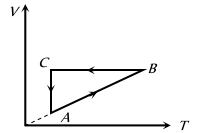
A cyclic process $A B C A$ is shown in the $V-T$ diagram. Process on the $P^{-} V$ diagram is
Image
A stone is dropped into a lake from a tower $500$ metre high. The sound of the splash will be heard by the man approximately after
A particle which is constrained to move along the $x$-axis, is subjected to a force in the same direction which varies with the distance $x$ of the particle from the origin as $F(x)=-k x+a x^3$. Here $k$ and $a$ are positive constants. For $x \geq 0$, the functional from of the potential energy $U(x)$ of the particle is
If 97.52 is divided by 2.54 , the correct result in terms of significant figures is
In steel, the Young's modulus and the strain at the breaking point are $2 \times 10^{11}\  Nm ^{-2}$ and $0.15$ respectively. The stress at the breaking point for steel is therefore
Masses of two substances are $1 g$ and $9 g$ respectively. If their kinetic energies are same, then the ratio of their momentum will be
A voltmeter of resistance $1000\,\Omega $ gives full scale deflection when a current of $100\, mA$ flow through it. The shunt resistance required across it to enable it to be used as an ammeter reading $1\, A$ at full scale deflection is ............... $\Omega $
The slopes of isothermal and adiabatic curves are related as
In which case does the potential energy decrease
In the study of transistor as an amplifier, if $\alpha=I_c / I_e$ and $\beta=I_c / I_b$, where $I_c, I_b$ and $l$ are the collector, base and emitter currents, then