MCQ
The final image is formed in a compound microscope will be :
- Areal and direct
- ✓virtual and inverted
- Cvirtual and direct
- Dreal and inverse
Generate a complete, print-ready paper with questions like this in minutes — across 16+ boards, with answer keys.
The current flowing in a coil of self inductance 0.4 mH is increased by 250 mA in 0.1 sec. The e.m.f. induced will be
|
(a) + 1 V |
(b) – 1 V |
(c) + 1 mV |
(d) – 1 mV |
Time period in vibration magnetometer will be infinity at
| (a) Magnetic equator | (b) Magnetic poles | (c) Equator | (d) At all places |
The ratio of the speed of the electrons in the ground state of hydrogen to the speed of light in vacuum is
|
(a) 1/2 |
(b) 2/137 |
(c) 1/137 |
(d) 1/237 |
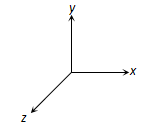
Light wave is travelling along y-direction. If the corresponding  vector at any time is along the x-axis, the direction of
  vector at that time is along
|
(a) y-axis |
(b) x-axis |
(c) + z-axis |
(d) – z axis |
A proton is about 1840 times heavier than an electron. When it is accelerated by a potential difference of 1 kV, its kinetic energy will be
|
(a) 1840 keV |
(b) 1/1840 keV |
(c) 1 keV |
(d) 920 keV |
The alternating voltage induced in the secondary coil of a transformer is mainly due to
|
(a) A varying electric field |
(b) A varying magnetic field |
|
(c) The vibrations of the primary coil |
(d) The iron core of the transformer |
If two bulbs of wattage 25 and 100 respectively each rated at 220 volt are connected in series with the supply of 440 volt, then which bulbs will fuse
|
(a) 100 watt bulb |
(b) 25 watt bulb |
(c) None of them |
(d) Both of them |