Question
The final volume of a system is equal to the initial volume in a certain process. Is the work done by the system necessarily zero? Is it necessarily non-zero.

Answer

Work done by the system is neither necessarily zero nor necessarily non-zero.
If in a certain process, the pressure P stays constant, then,
$\Delta\text{W}=\text{P}\Delta\text{V}$
$\Rightarrow\text{W}=\text{P}(\text{V}_2-\text{V}_1)$
As $\text{V}_2=\text{V}_1$
$\Rightarrow\text{W}=0$
(Initial volume, V1 = Final volume, V2)
Hence, it is an isobaric process.
Even if P = P(V), net work done will be zero if V2 = V1. In this case, work done is zero.
If the system goes through a cyclic process, then initial volume gets equal to the final volume after one cycle. But work done by the gas is non-zero.

Need a full question paper?

Generate a complete, print-ready paper with questions like this in minutes — across 16+ boards, with answer keys.
Start Generating Free

Similar questions

When a charged comb is brought near a small piece of paper, it attracts the piece. Does the paper become charged when the comb is brought near it?
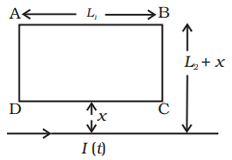
A rectangular loop of wire ABCD is kept close to an infinitely long wire carrying a current $I ( t )= l _0\left(1-\frac{t}{T}\right)$ for  $0 \leq t \leq T$ and $I (0)=0$ for $t > T$ (Figure). Find the total charge passing through a given point in the loop, in time T .
The resistance of the loop is R. 
Image
A water particle of mass 10.0mg and having a charge of 1.50 × 10-6C stays suspended in a room. What is the magnitude of electric field in the room? What is its direction?
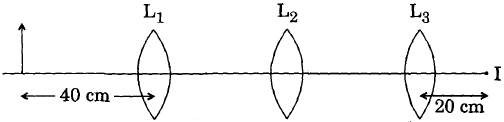
You are given three lenses L1, L2 and L3 each of focal length 20 cm. An object is kept at 40 cm in front of L1, as shown. The final real image is formed at the focus I of L3. Find the separations between L1, L2 and L3.

Suppose an attractive nuclear force acts between two protons which may be written as $\text{F}=\text{Ce}^{-\text{kr}}/\text{r}^2.$
  1. Write down the dimensional formulae and appropriate SI units of C and k.
  2. Suppose that k = 1 fermi-1 and that the repulsive electric force between the protons is just balanced by the attractive nuclear force when the separation is 5 fermi. Find the value of C.
When a charged comb is brought near a small piece of paper, it attracts the piece. Does the paper become charged when the comb is brought near it?
What length of a copper wire of cross-sectional area 0.01mm2 will be needed to prepare a resistance of $1\text{k}\Omega?$ Resistivity of copper $=1.7\times10^{-8}\Omega\text{-m}.$
Classify metals, conductors and semiconductors.
What do you mean by resolving limit of a telescope ? What will be the resolving limit of a telescope whose objective has aperture of 5 m if the wavelength of the light is 5000 Å ?
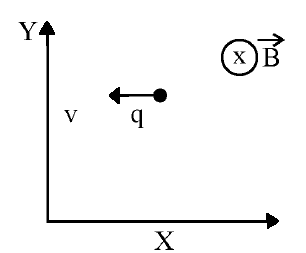
  1. A point charge q moving with speed v enters a uniform magnetic field B that is acting into the plane of the paper as shown. What is the path followed by the charge q and in which plane does it move?
  2. How does the path followed by the charge get affected if its velocity has a component parallel to $\overrightarrow{\text{B}}$?
  3. If an electric field $\overrightarrow{\text{E}}$ is also applied such that the particle continues moving along the original straight line path, what should be the magnitude and direction of the electric field $\overrightarrow{\text{E}}$?