MCQ
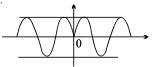
The function $f(x) = sgnx\,\cdot \,sinx$ is
  • A
    discontinuous no where.
  • B
    an even function
  • C
    aperiodic
  • All of the above

Answer

Correct option: D.
All of the above
d
$f (x) =$ $\left[ {\begin{array}{*{20}{c}}  {} \\   {} \end{array}} \right.$ $\begin{array}{*{20}{c}}  {\sin x\,\,\,x \geqslant 0} \\   { - \sin x\,\,\,x\, < 0} \end{array}$

Need a full question paper?

Generate a complete, print-ready paper with questions like this in minutes — across 16+ boards, with answer keys.

Start Generating Free

Similar questions

If $\text{y}^\frac{1}{\text{n}}+\text{y}-^\frac{1}{\text{n}}=2\text{x}$ then find $(\text{x}^2-1)\text{y}_2+\text{xy}_1=$ 
  1. -n2y
  2. n2y
  3. 0
  4. None of these.
The adjacent sides of Parallelogram are $\vec{a}=\hat{i}-\hat{j}+3 \hat{k}$ and $\vec{b}=2 \hat{i}-7 \hat{j}+\hat{k}$, then its area is __________ .
$\smallint \frac{{{{\sin }^2}x{{\cos }^2}x}}{{{{\left( {{{\sin }^5}x + {{\cos }^3}x{{\sin }^2}x + {{\sin }^3}x{{\cos }^2}x + {{\cos }^5}x} \right)}^2}}}dx$
The value of the determinant $\left| {\,\begin{array}{*{20}{c}}1&1&1\\{b + c}&{c + a}&{a + b}\\{b + c - a}&{c + a - b}&{a + b - c}\end{array}\,} \right|$ is
${I_1} = \int {{{\sin }^{ - 1}}x\,\,dx} $ and ${I_2} = \int {{{\sin }^{ - 1}}\sqrt {1 - {x^2}} } dx$then
Let $f(x) = [x]\sin \left( {\frac{\pi }{{[x + 1]}}} \right)$, where $[.]$ denotes the greatest integer function. The domain of $f$ is ….and the points of discontinuity of $f$ in the domain are
What is the value of the integral $I = \int {\frac{{dx}}{{(1 + {e^x})\,\,(1 + {e^{ - x}})}}} $
The general solution of the differential equation $\sqrt{1+x^{2}+y^{2}+x^{2} y^{2}}+x y \frac{d y}{d x}=0$ is

(where $C$ is a constant of integration)

Write the number of points where f(x) = |x + 2| + |x - 3| is not differentiable:
  1. 2
  2. 0
  3. 1
  4. 3
For $k \in R$, let the solutions of the equation $\cos \left(\sin ^{-1}\left(x \cot \left(\tan ^{-1}\left(\cos \left(\sin ^{-1} x\right)\right)\right)\right)\right)=k, 0\,<\,|x|<\,\frac{1}{\sqrt{2}}$ be $\alpha$ and $\beta$, where the inverse trigonometric functions take only principal values. If the solutions of the equation $x ^{2}- bx -5=0$ are $\frac{1}{\alpha^{2}}+\frac{1}{\beta^{2}}$ and $\frac{\alpha}{\beta}$, then $\frac{b}{k^{2}}$ is equal to$......$