MCQ
The function $f(x) =$ ${x^{\frac{1}{{\ln \,x}}}}$
  • A
    is a constant function
  • B
    has a domain $(0, 1) U (e, \infty )$
  • C
    is such that $\mathop {\lim it}\limits_{x \to 1}  f(x) $ exist
  • $(A)$ or $(C)$ both

Answer

Correct option: D.
$(A)$ or $(C)$ both
d
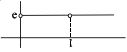
$y = x{\log _x}e$ $= e$ (constant)

$\Rightarrow A$ and $C$

as $\mathop {\lim it}\limits_{x \to 1} $ $f(x) = e$
Need a full question paper?

Generate a complete, print-ready paper with questions like this in minutes — across 16+ boards, with answer keys.

Start Generating Free

Similar questions

Let $f (x) =$  $\left[ {\begin{array}{*{20}{c}}  {\begin{array}{*{20}{c}}  {\frac{{\begin{array}{*{20}{c}}  {{2^x}}&{ + {2^{3 - x}}}&{ - 6} \end{array}}}{{\begin{array}{*{20}{c}}  {\sqrt {{2^{ - x}}} }&{ - {2^{1 - x}}} \end{array}}}}&{if}&{x > 2} \end{array}} \\   {} \\   {} \\   {} \\   {\begin{array}{*{20}{c}}   {\frac{{\begin{array}{*{20}{c}}  {{x^2}}&{ - 4} \end{array}}}{{x - \sqrt {3x - 2} }}}&{if}&{x < 2}  \end{array}} \end{array}} \right.$  then
List $I$ List $II$
$P.$ Let $y(x)=\cos \left(3 \cos ^{-1} x\right), x \in[-1,1], x \neq \pm \frac{\sqrt{3}}{2}$. Then $\frac{1}{y(x)}\left\{\left(x^2-1\right) \frac{d^2 y(x)}{d x^2}+x \frac{d y(x)}{d x}\right\}$ equals $1.$ $1$
$Q.$ Let $A_1, A_2, \ldots \ldots, A_n(n>2)$ be the vertices of a regular polygon of $n$ sides with its centre at the origin. Let $\vec{a}_k$ be the position vector of the point $A_k, k=1,2, \ldots, n$. If $\left|\sum_{k=1}^{n-1}\left(\overrightarrow{a_k} \times \overrightarrow{a_{k+1}}\right)\right|=\left|\sum_{k=1}^{n-1}\left(\overrightarrow{a_k} \cdot \overrightarrow{a_{k+1}}\right)\right|$, then the minimum value of $n$ is $2.$ $2$
$R.$ If the normal from the point $P(h, 1)$ on the ellipse $\frac{x^2}{6}+\frac{y^2}{3}=1$ is perpendicular to the line $x+y=8$, then the value of $h$ is $3.$ $8$
$S.$ Number of positive solutions satisfying the equation $\tan ^{-1}\left(\frac{1}{2 x+1}\right)+\tan ^{-1}\left(\frac{1}{4 x+1}\right)=\tan ^{-1}\left(\frac{2}{x^2}\right)$ is $4.$ $9$

Codes: $ \quad P \quad Q \quad R \quad S $

Let $f: R \rightarrow R$ be a continuous function such that $f\left(x^2\right)=f\left(x^3\right)$ for all $x \in R$. Consider the following statements.

$I.$ $f$ is an odd function.

$II.$ $f$ is an even function.

$III$. $f$ is differentiable everywhere. Then,

If $x = y\sqrt {1 - {y^2},} $ then ${{dy} \over {dx}} = $
If $n$ is any integer, then $\int_0^\pi {{e^{{{\cos }^2}x}}{{\cos }^3}(2n + 1)x\,dx = } $
Solution of differential equation x dy - yx = 0 represents:
  1. rectangular hyperbola
  2. straight line passing through origin
  3. parabola whose vertex is at origin
  4. circle whose center is at origin
If $\int_0^{\frac{\pi }{2}} {\frac{{\cot \,x}}{{\cot \,x + \cos ec\,x}}} dx = m\left( {\pi  + n} \right)$, then $m.n$ is equal to
If $a = 2i + k,\,\,b = i + j + k$ and $c = 4i - 3j + 7k.$ If $d \times b = c \times b$ and $d\,.\,a = 0,$ then $d$ will be
$\int_0^1 {\frac{{{e^x}(x - 1)}}{{{{(x + 1)}^3}}}\,dx = } $
When the tangent to the curve $\text{y}=\text{x}\log\text{x}$ is parallel to the chord joining the points (1, 0) and (e, e), the value of x is:
  1. $\text{e}^{\frac{1}{1}-\text{e}}$
  2. $\text{e}^{(\text{e}-1)(2\text{e}-1)}$
  3. $\text{e}^{\frac{2\text{e}-1}{\text{e}-1}}$
  4. $\frac{\text{e}-1}{\text{e}}$