MCQ
The gas law $\frac{{PV}}{T} = $ constant is true for
  • A
    Isothermal changes only
  • B
    Adiabatic changes only
  • Both isothermal and adiabatic changes
  • D
    Neither isothermal nor adiabatic changes

Answer

Correct option: C.
Both isothermal and adiabatic changes
c
(c) For an ideal gas$:$

$P V=n R T$

$\frac{P V}{T}=n R=$ constant

Which is valid for all processes, which includes isothermal or adiabatic.

Hence option $\mathrm{C}$ is correct.

Need a full question paper?

Generate a complete, print-ready paper with questions like this in minutes — across 16+ boards, with answer keys.
Start Generating Free

Similar questions

An electron having mass $m$ and kinetic energy $K$ enter in uniform magnetic field $B$ perpendicularly, then its frequency will be
In a vernier callipers, $10$ divisions of vernier scale coincides with $9$ divisions of main scale, the least count of which is $0.1\,cm$. If in the measurement of inner diameter of cylinder zero of vernier scale lies between $1.3\,cm$ and $1.4\, \ cm$ of main scale and $2^{nd}$ division of vernier scale coincides with main scale division then diameter will be $.......... cm$
$1.6\, mA$ current is flowing in conducting wire then the number of electrons flowing per second is
Boyle's law holds for an ideal gas during
From an inclined plane a sphere, a disc, a ring and a shell are rolled without slipping. The order of their reaching at the base will be
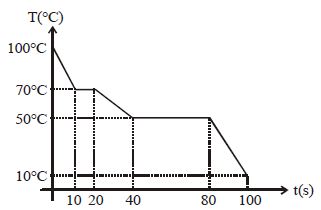
A substance is cooled at a constant power. Its temperature vs time graph is shown. The value of $S_{solid} : S_{liquid} : S_{gas}$
The valence of an impurity added to germanium crystal in order to convert it into a $ P-$ type semi conductor is
A block with mass $M$ is connected by a massless spring with stiffiess constant $k$ to a rigid wall and moves without friction on a horizontal surface. The block oscillates with small amplitude $A$ about an equilibrium position $x_0$. Consider two cases: ($i$) when the block is at $x_0$; and ($ii$) when the block is at $x=x_0+A$. In both the cases, a perticle with mass $m$ is placed on the mass $M$ ?

($A$) The amplitude of oscillation in the first case changes by a factor of $\sqrt{\frac{M}{m+M}}$, whereas in the second case it remains unchanged

($B$) The final time period of oscillation in both the cases is same

($C$) The total energy decreases in both the cases

($D$) The instantaneous speed at $x_0$ of the combined masses decreases in both the cases

A balloon contains $1500 \,m^3$ of helium at $27^\circ C$ and $4$ atmospheric pressure. The value of helium at $ - \,3^\circ C$ temperature and $2$ atmospheric pressure will be ...... $m^3$
The weight of a person is $60\, kg.$ If he gets $10^5$ calories heat through food and the efficiency of his body is $28\%,$ then upto how much height he can climb ........ $m$ (approximately)