MCQ
The Gaussian surface:
  • A
    Can pass through a continuous charge distribution.
  • B
    Cannot pass through a continuous charge distribution.
  • C
    Can pass through any system of discrete charges.
  • D
    Can pass through a continuous charge distribution as well as any system of discrete charges.
Answer

  1. Cannot pass through a continuous charge distribution.

Need a full question paper?

Generate a complete, print-ready paper with questions like this in minutes — across 16+ boards, with answer keys.

Start Generating Free

Similar questions

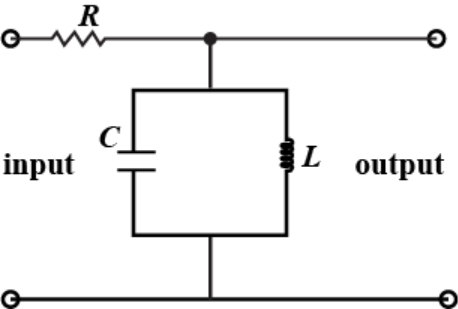
The circuit shown in Fig. acts as a.
Image

The wavelength of maximum energy, released during an atomic explosion, was 2.93 × 10⁻¹⁰ m. Given that the Wien's constant is 2.93 × 10⁻³ m K, the maximum temperature attained must be of the order of

(a) 10–7 K

(b) 107 K

(c) 10–13 K

(d) 5.86 × 10⁷ K

The value of dielectric strength for air is:
In a circuit, the current lags behind the voltage by a phase difference of $\frac{\pi}{2}$ the circuit will contain which of the following: 

A condenser having a capacity of 6mF is charged to 100 V and is then joined to an uncharged condenser of 14 μF  and then removed. The ratio of the charges on 6mF  and 14mF  and the potential of 6mF will be

(a)  and 50 volt

(b)  and 30 volt

(c)  and 30 volt

(d)  and 0 volt

A thin lens made of glass of refractive index 1.5 has a front surface + 11 D power and back surface – 6 D. If this lens is submerged in a liquid of refractive index 1.6, the resulting power of the lens is

(a) – 0.5 D

(b) + 0.5 D

(c) – 0.625 D

(d) + 0.625 D

Three capacitors of 2.0, 3.0  and  6.0 μF are connected in series to a  10 V  source. The charge on the 3.0 μF  capacitor is

(a) 5 μC

(b) 10 μC

(c) 12 μC

(d) 15 μC

In a radioactive decay, neither the atomic number nor the mass number changes. Which of the following would be emitted in the decay process

(a) Proton

(b) Neutron

(c) Electron

(d) Photon

If a wire of resistance R is melted and recasted to half of its length, then the new resistance of the wire will be

(a) R/4    

(b) R/2

(c) R 

(d) 2R

A silver voltameter of resistance 2 ohm and a 3 ohm resistor are connected in series across a cell. If a resistance of 2 ohm is connected in parallel with the voltameter, then the rate of deposition of silver

(a) Decreases by 25%

(b) Increases by 25%

(c) Increases by 37.5%

(d) Decreases by 37.5%