MCQ
The given reaction, X(g) + e- → X-(g) is an example of:
  • A
    Electron gain enthalpy.
  • B
    Electron loss enthalpy.
  • C
    Ionisation enthalpy.
  • D
    Both (a) and (c).

Answer

  1. Electron gain enthalpy.

Need a full question paper?

Generate a complete, print-ready paper with questions like this in minutes — across 16+ boards, with answer keys.

Start Generating Free

Similar questions

Ejection of the photoelectron from metal in the photoelectric effect experiment can be stopped by applying $0.5\,V$ when the radiation of $250\, nm$ is used. The work function of the metal is ................ $\mathrm{eV}$
The work function $(\phi)$ of some metals is listed below. The number of metals which will show photoelectric effect when light of $300 \ nm$ wavelength falls on the metal is
Metal $Li$ $Na$ $K$ $Mg$ $Cu$ $Ag$ $Fe$ $Pt$ $W$
$\phi( eV )$ $2.4$ $2.3$ $2.2$ $3.7$ $4.8$ $4.3$ $4.7$ $6.3$ $4.75$
Under normal condition which of the following electronic configuration is able to form dipositive ion
What hybrid orbitals will form the following compound ${H_3}C - CH = CH - C{H_2} - C{H_3}$
In photoelectric effect, the photocurrent
Quantum No. $l = 2$ and $m = 0$ represent which orbital :
Which of the following elements will gain one electron more readily in comparison to other elements of their group?
For the reactions

$A\, \rightleftharpoons \,B$                     ${K_C} = 2$

$B\, \rightleftharpoons \,C$                    ${K_C} = 3$

$C\, \rightleftharpoons \,D+E$               ${K_C} = 5$

$K_C$ for the reaction $A\, \rightleftharpoons \,D+E$ is
Which statement is correct about $CO_2$. If central atom use $s + P_x$ orbitals in hybridisation
$(i)$ $\pi $ bond will be formed by $P_Y$ and $P_Z$
$(ii)$ molecule can be in $XY$ plane
$(iii)$ molecule can be in $XZ$ plane
$(iv)$ molecule can be in infinite plane
$(v)$ molecule can be in $YZ$ plane
Correct code is
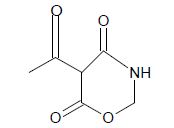
Identify which functional group is not present in following compound?