MCQ
The lanthanide contraction is responsible for the fact that
  • A
    $Zr$ and $Y$ have about the same radius
  • B
    $Zr$ and $Nb$ have similar oxidation state
  • $Zr$ and $Hf$ have about the same radius
  • D
    $Zr$ and $Zn$ have the same oxidation state

Answer

Correct option: C.
$Zr$ and $Hf$ have about the same radius
c
Due to lanthanide contration the size for $Zr$ and $Hf$ is same. Lanthanide contraction can be explained on the basis of shielding effect.In multi-electron atoms the electrons are added in outer shells. The electrons already present in inner shells, shield the outer electrons from nuclear charge, making them experience a lower effective charge of the nucleus. The shielding effect exerted by the inner electrons decreases in the order $s\,>\,p\,>\,d\,>\,f$. This $f$ subshell poorly shields the outer electron from nuclear attraction which results in more attractive pull of nucleus on outer electron and smaller size.In case of post lanthenide elements like $Hf, 4 f$ subshell is filled and it is not very effective at shielding the outer shell ( $n =5$ and $n =6$ ) electrons. it is similar to $Zr$.

Need a full question paper?

Generate a complete, print-ready paper with questions like this in minutes — across 16+ boards, with answer keys.
Start Generating Free

Similar questions

$CrO_3$ dissolves in aqueous $NaOH$ to give
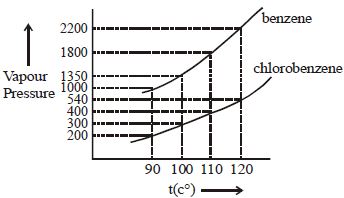
Assuming the formation of an ideal solution, determine the boiling point of a mixture containing $1560\,g$ benzene (molar mass $= 78$) and $1125\,g$ chlorobenzene (molar mass $= 112.5$ ) using the following against an external pressure of $1000\,torr$ .......... $^oC$.
A co-ordination complex compound of cobalt has the molecular formulae containing five ammonia molecules, one nitro group and two chlorine atoms for one cobalt atom. One mole of this compound produces three mole ions in an aqueous solution on reacting with excess of $AgN{O_3},$ $AgCl$ precipitate. The ionic formula for this complex would be:
The catalytic efficiency of two different enzyme can be compared by the:
Product $'A' $ and  $'B'$ are respectively

$\begin{array}{*{20}{c}}
  {C{H_3} - C = CH - {C_6}{H_5}} \\ 
  {|\,\,\,\,\,\,\,\,\,\,\,\,\,\,\,\,\,\,\,\,\,} \\ 
  {C{H_3}\,\,\,\,\,\,\,\,\,\,\,\,\,\,\,} 
\end{array}$ $\xrightarrow{{HBr\,/\,Peroxide}}'A'$

$\begin{array}{*{20}{c}}
  {C{H_3} - C = CH - {C_6}{H_5}} \\ 
  {|\,\,\,\,\,\,\,\,\,\,\,\,\,\,\,\,\,\,\,\,\,} \\ 
  {C{H_3}\,\,\,\,\,\,\,\,\,\,\,\,\,\,\,} 
\end{array}$ $\xrightarrow[{HBr}]{}'B'$

$75.2 \mathrm{~g}$ of $\mathrm{C}_6 \mathrm{H}_5 \mathrm{OH}$ (phenol) is dissolved in a solvent of $\mathrm{K}_{\mathrm{f}}=14$. If the depression in freezing point is $7 \mathrm{~K}$ then find the $\%$ of phenol that dimerises.
Among $H_2O, H_2S, H_2Se$ and $H_2Te$. The one with the highest boiling point is
Assertion: A mixture of $He$ and $O_2$ is used for respiration for deep sea divers.

Reason: $He$ is soluble in blood.

In the neutral or faintly alkaline medium, $KMnO _{4}$ oxidises iodide into iodate. The change in oxidation state of manganese in this reaction is from?
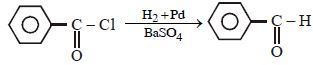
The given reaction is