MCQ
The Lanthanoids contraction is responsible for the fact that
- A$Zr$ and $Y$ have about same radius
- B$Zr$ and $Nb$ have similar oxidation state
- ✓$Zr$ and $Hf$ have about the same radius
- D$Zr$ and $Zn$ have the same oxidation state
The radii are very similar even though the number of electrons increases from $40$ to $72$ and the atomic mass increases from $91.22$ to $178.49\,g / mol$. The increase in mass and the unchanged radii lead to a steep increase in density from $6.51$ to $13.35\,g / cm ^3$.
Zirconium and hafnium, therefore, have very similar chemical behaviour, having closely similar radii and electron configurations. Radius-dependent properties such as lattice energies, solvation energies, and stability constants of complexes are also similar.
Generate a complete, print-ready paper with questions like this in minutes — across 16+ boards, with answer keys.
The above reaction requires which of the following reaction conditions ?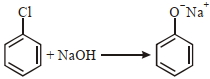
|
Exp. |
$[A]_0$ |
$[B]_0$ |
Rate (mole $s^{-1}$) |
|
$(1)$ |
$0.50$ |
$0.50$ |
$1.6 \times {10^{ - 4}}$ |
|
$(2)$ |
$0.50$ |
$1.00$ |
$3.2 \times {10^{ - 4}}$ |
|
$(3)$ |
$1.00$ |
$1.00$ |
$3.2 \times {10^4}$ |
$C{H_3}COOH + PC{l_5} \to A\mathop {\xrightarrow{{{C_6}{H_6}}}}\limits_{anh.\,AlC{l_3}} $ $B\mathop {\xrightarrow{{{C_2}{H_5}MgBr}}}\limits_{ether} C$