MCQ
The Lyman transitions involve:
- ALargest changes of energy.
- BSmallest changes of energy.
- CLargest changes of potential energy.
- DSmallest changes of potential energy.
Generate a complete, print-ready paper with questions like this in minutes — across 16+ boards, with answer keys.
The photoelectric effect can be understood on the basis of
|
(a) The principle of superposition |
(b) The electromagnetic theory of light |
|
(c) The special theory of relativity |
(d) Line spectrum of the atom |
Consider a parallel plate capacitor of 10 μF (micro-farad) with air filled in the gap between the plates. Now one half of the space between the plates is filled with a dielectric of dielectric constant 4, as shown in the figure. The capacity of the capacitor changes to

|
(a) 25 μF |
(b) 20 μF |
(c) 40 μF |
(d) 5 μF |
A sample contains 16 gm of a radioactive material, the half life of which is two days. After 32 days, the amount of radioactive material left in the sample is
|
(a) Less than 1 mg |
(b) |
(c) |
(d) 1 gm |
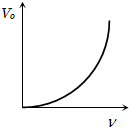
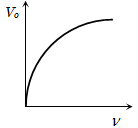
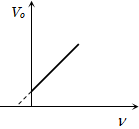
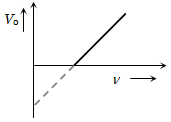
For a photoelectric cell the graph showing the variation of cut of voltage (Vo) with frequency (n) of incident light is best represented by
|
(a)
|
(b)
|
(c)
|
(d)
|
The light when enters the human eye experiences most of the refraction while passing through
|
(a) Cornea |
(b) Aqueous humour |
(c) Vitrous humour |
(d) Crystalline lens |