MCQ
The major product in the given reaction :
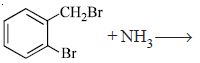
- ✓
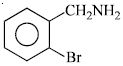
- B
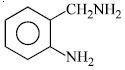
- C
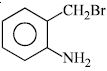
- DAll of these
Generate a complete, print-ready paper with questions like this in minutes — across 16+ boards, with answer keys.
$\begin{array}{*{20}{c}}
{Ph - CH = CH - CH - C = O\xrightarrow[{PH = 4.5}]{{{H_2}N - OH}}} \\
{{\mkern 1mu} {\mkern 1mu} \,\,\,\,\,\,\,\,\,\,\,\,\,\,\,\,\,\,\,\,|\,\,\,\,\,\,\,\,\,\,\,\,\,\,\,|{\mkern 1mu} {\mkern 1mu} {\mkern 1mu} {\mkern 1mu} {\mkern 1mu} {\mkern 1mu} {\mkern 1mu} {\mkern 1mu} {\mkern 1mu} {\mkern 1mu} {\mkern 1mu} {\mkern 1mu} {\mkern 1mu} {\mkern 1mu} {\mkern 1mu} {\mkern 1mu} {\mkern 1mu} {\mkern 1mu} {\mkern 1mu} {\mkern 1mu} {\mkern 1mu} {\mkern 1mu} {\mkern 1mu} {\mkern 1mu} {\mkern 1mu} } \\
{{\mkern 1mu} {\mkern 1mu} {\mkern 1mu} {\mkern 1mu} \,\,\,\,\,\,\,\,\,\,\,\,\,\,\,\,\,\,\,\,\,C{H_3}\,\,\,\,\,\,\,H{\mkern 1mu} {\mkern 1mu} \,\,{\mkern 1mu} {\mkern 1mu} {\mkern 1mu} {\mkern 1mu} {\mkern 1mu} {\mkern 1mu} {\mkern 1mu} {\mkern 1mu} {\mkern 1mu} {\mkern 1mu} {\mkern 1mu} {\mkern 1mu} {\mkern 1mu} {\mkern 1mu} {\mkern 1mu} {\mkern 1mu} {\mkern 1mu} {\mkern 1mu} {\mkern 1mu} {\mkern 1mu} {\mkern 1mu} {\mkern 1mu} {\mkern 1mu} {\mkern 1mu} }
\end{array}$ ?
| List $I$ | List $II$ |
| $P.$ $PbO _2+ H _2 SO _4 \xrightarrow{?} PbSO _4+ O _2+$ other product | $1.$ NO |
| $Q.$ $Na _2 S _2 O _3+ H _2 O \xrightarrow{?} NaHSO _4+$ other product | $2.$ $I_2$ |
| $R.$ $N _2 H _4 \xrightarrow{\text { ? }} N _2+$ other product | $3.$ Warm |
| $S.$ $XeF _2 \xrightarrow{?} Xe +$ other product | $4.$ $Cl _2$ |
Codes: $ \quad P \quad Q \quad R \quad S $
Reason : In the complex, the coordination number of $Fe$ is $6$.
(Density of water $= 1\,gm/ml$ )