MCQ
The mass number of a nucleus is:
- AAlways less than its atomic number.
- BAlways more than its atomic number.
- CEqual to its atomic number.
- DSometimes more than and sometimes equal to its atomic number.
Explanation:
Mass number of a nucleus is defined as the sum of the number of neutron and protons present in the nucleus, i.e. the number of nucleons in the nucleus, whereas atomic number is equal to the number of protons present. Therefore, the atomic number is smaller than the mass number. But in the nucleus (like that of hydrogen 1H1), only protons are present. Due to this, the mass number is equal to the atomic number.
Generate a complete, print-ready paper with questions like this in minutes — across 16+ boards, with answer keys.
In a copper voltameter, mass deposited in 6 minutes is m gram. If the current-time graph for the voltameter is as shown here, then the E.C.E of the copper is

|
(a) m / 5 |
(b) m / 300 |
(c) 5 m |
(d) m / 18000 |
A heavenly body is receding from earth such that the fractional change in l is 1, then its velocity is
|
(a) C |
(b) |
(c) |
(d) |
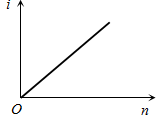
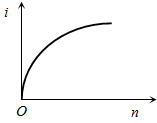
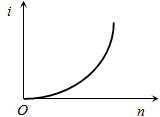
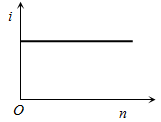
A battery consists of a variable number 'n' of identical cells having internal resistances connected in series. The terminals of battery are short circuited and the current i is measured. Which of the graph below shows the relation ship between i and n
|
(a)
|
(b)
|
(c)
|
(d)
|
A spherical surface of radius of curvature R separates air (refractive index 1.0) from glass (refractive index 1.5). The centre of curvature is in the glass. A point object P placed in air is found to have a real image Q in the glass. The line PQ cuts the surface at a point O, and PO = OQ. The distance PO is equal to
|
(a) 5 R |
(b) 3 R |
(c) 2 R |
(d) 1.5 R |