MCQ
The mass of the electron varies with
  • A
    The size of the cathode ray tube
  • B
    The variation of $‘g’$
  • Velocity
  • D
    Size of the electron

Answer

Correct option: C.
Velocity
c
(c)Mass is basically a constant term for any physical application at low velocity. But in accordance with Einstein’s theory of relativity, at higher speeds the mass of the particle change according to formula
$m = \frac{{{m_0}}}{{\sqrt {1 - ({v^2}/{c^2})} }}$

Need a full question paper?

Generate a complete, print-ready paper with questions like this in minutes — across 16+ boards, with answer keys.
Start Generating Free

Similar questions

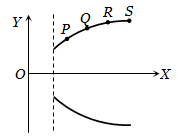
In a parabola spectrograph, the velocities of four positive ions P,Q,R and S are $v_1, v_2, v_3$ and $v_4$ respectively
In alternating current circuits, the $a.c$. meters measure
In pure inductive circuit, the curves between frequency $f$ and reciprocal of inductive reactance $1/XL$ is
Two insulated rings, one of slightly smaller diameter than the other are suspended along their common diameter as shown. Initially the planes of the rings are mutually perpendicular. When a steady current is set up in each of them
Two circular coils $1$ and $2$ are made from the same wire but the radius of the $1^{st}$ coil is twice that of the $2^{nd}$ coil. What is the ratio of potential difference in volts should be applied across them so that the magnetic field at their centres is the same?
Point charge $\mathrm{q}_1=2 \mu \mathrm{C}$ and $\mathrm{q}_2=-1 \mu \mathrm{C}$ are kept at points x = 0 and x = 6 respectively. Electrical potential will be zero at points
In order to forward bias a $PN$ junction, the negative terminal of battery is connected to
In amplitude modulation, the message signal

${V}_{{m}}({t})=10 \sin \left(2 \pi \times 10^{5} {t}\right)$ $volts$ and

Carrier signal

${V}_{{c}}({t})=20 \sin \left(2 \pi \times 10^{7} {t}\right)$ $volts$

The modulated signal now contains the message signal with lower side band and upper side band frequency, therefore the bandwidth of modulated signal is $\alpha\, {kHz}$. The value of $\alpha$ is :

A $p-$type semiconductor is:
Calculate the current through a lamp of $25w$ operating at $220v.$