MCQ
The molecule which does not exhibit strong hydrogen bonding is:
  • A
    Methyl amine
  • Diethyl ether
  • C
    Acetic acid
  • D
    Glucose

Answer

Correct option: B.
Diethyl ether
The molecule which does not exhibit strong hydrogen bonding is diethylether $\mathrm{CH}_3-\mathrm{O}-\mathrm{CH}_3$​.
Hydrogen bonding is possible when $H$ atom is attached to an electronegative $N,O$ or $F$ atom.

Need a full question paper?

Generate a complete, print-ready paper with questions like this in minutes — across 16+ boards, with answer keys.
Start Generating Free

Similar questions

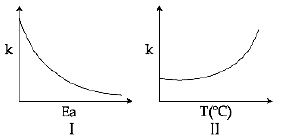
Consider the given plots for a reaction obeying Arrhenius equation $(0\,^oC < T < 300\,^oC)$ : ($k$ and $E_a$ are rate constant and activation energy respectively) Choose the correct option
Product $(N)$ is
Reaction of a carbonyl compound with one of the following reagents involves nucleophilic addition followed by elimination of water. The reagent is
Select the appropriate option for the given statement. Sodium salts of some acids are very useful as $.......$
Find iso-electric point of given amino acid

$\begin{align}
   \begin{matrix}
   C{{H}_{3}}-CH-C{{O}_{2}}H  \\
   |\,\,\,\,\,\,\,\,  \\
   \underset{\oplus }{\mathop{N}}{{H}_{3}}  \\
\end{matrix}\,\,\,\,\,\,p{{K}_{a}}=2.2 \\ 
  \,\,\,\,\,\,\,\,\,\,\,\,\,\,\,\,\,\,\,\,\,\,\,\,\,\,\,\,\,\,\,\,p{{K}_{b}}=4.4 \\ 
\end{align}$

Isobutyl magnesium bromide with dry ether and absolute alcohol gives
Which of the following expressions correctly represents the equivalent conductance at are the equivalent conductances infinite dilution of $Al_2(SO_4)_3 .$ Given that $\mathop {{\Lambda _{A{l^{3 + }}}}}\limits^{o\,\,\,\,\,\,\,\,\,\,\,\,\,} $ and $\mathop {{\Lambda _{SO_4^{2 - }}}}\limits^{o\,\,\,\,\,\,\,\,\,\,\,} $ are the equivalent conductances at infinite dilution of the respective ions?
Which of the following is reducing sugar ?
Given below are two statements: one is labelled as Assertion $(A)$ and the other is labelled as Reason $(R).$

Assertion $(A):$ Synthesis of ethyl phenyl ether may be achieved by Williamson synthesis.

Reason $(R):$ Reaction of bromobenzene with sodium ethoxide yields ethyl phenyl ether.

In the light of the above statements, choose the most appropriate answer from the options given below:

The rate constant of the reaction $2H_2O_2(aq) \to  2H_2O(aq) + O_2(g)$ is $3\times10^{-3}\, min^{-1}$. At what concentration of $H_2O_2$, the rate of reaction will be $2\times10^{-4}\, M\, s^{-1}$ ? ............ $M$