MCQ
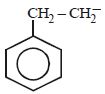
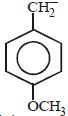
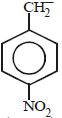
The most stable carbanion among the following is
  • A

  • B

  • C


Answer

Correct option: D.

d
$-\,NO_2$ group, being strong electron-withdrawing, disperses the negative charge, hence stabilizes the concerned carbanion.

Need a full question paper?

Generate a complete, print-ready paper with questions like this in minutes — across 16+ boards, with answer keys.

Start Generating Free

Similar questions

An amino acid may be represented by general formula $\begin{matrix}
   R\,\,\,\,\,\,\,\,  \\
   |\,\,\,\,\,\,\,\,  \\
   {{H}_{2}}N-CH-COOH  \\
\end{matrix}$ If $R = -CH_2C_6H_5$ then it is phenylalanine $(Phe)$ and if $R = CH_3$ then it is alanine $(Ala)$. Find the sequence of reagents from those given below to synthesize $Phe- Ala$

$(1)$ $\begin{matrix}
   C{{H}_{3}}  \\
   |\,\,\,\,\,\,  \\
   ZNH\,C\,HC{{O}_{2}}H  \\
\end{matrix}$                             $(2)$ $\begin{matrix}
   C{{H}_{3}}\,\,\,\,\,\,\,\,\,\,\,\,\,\,\,\,\,\,\,\,  \\
   |\,\,\,\,\,\,\,\,\,\,\,\,\,\,\,\,\,\,\,\,\,\,\,\,\,\,\,\,  \\
   {{H}_{2}}N\,C\,HC{{O}_{2}}C{{H}_{2}}{{C}_{6}}{{H}_{5}}  \\
\end{matrix}$

$(3)$ $\begin{matrix}
   \,\,\,\,\,\,\,\,\,\,\,\,C{{H}_{3}}{{C}_{6}}{{H}_{5}}  \\
   |\,\,\,\,\,  \\
   ZNH\,C\,HC{{O}_{2}}H  \\
\end{matrix}$                $(4)$ $\begin{matrix}
   C{{H}_{2}}{{C}_{6}}{{H}_{5}}\,\,\,\,\,  \\
   |\,\,\,\,\,\,\,\,\,\,\,\,\,\,\,\,\,\,\,\,\,\,\,\,\,\,\,  \\
   {{H}_{2}}N\,CHC{{O}_{2}}C{{H}_{2}}{{C}_{6}}{{H}_{5}}  \\
\end{matrix}$

An organic compound undergoes first order decompostion. The time taken for its decomposition to $\frac{1}{8}$ and $\frac{1}{10}$ of its initial concentration are $t_{1/8}$ and $t_{1/10}$ respectively. What is the value of $\frac{{{t_{1/8}}}}{{{t_{1/10}}}}$ ?   $[\log\, 2 = 0.30]$
$C{H_3} - C{H_2} - OH\,\xrightarrow[\Delta ]{{C{l_2}\,/\,O{H^\Theta }}}A$ $\xrightarrow[\Delta ]{{Ag}}B\,\xrightarrow[{1\,\% \,\,HgS{O_4}}]{{20\,\,\% \,\,{H_2}S{O_4}\,,\,{H_2}O}}C$

Compound $'C'$ is

What is the $\left[ {O{H^ - }} \right]$ in the final solution prepared by mixing $20.0\, mL$ of $0.050\, M\, HCl$ with $30.0\, mL$ of $0.10\,M\, Ba(OH)_2$  ................ $\mathrm{M}$ ?
The rates of a certain reaction $(dc/dt)$ at different times are as follows

Time                                 Rate (mole $litre^{-1}\,sec^{ -1}$ )

$0$                                        $2.8 \times {10^{ - 2}}$

$10$                                      $2.78 \times {10^{ - 2}}$

$20 $                                     $2.81 \times {10^{ - 2}}$

$30$                                       $2.79 \times {10^{ - 2}}$

The reaction is

In the given reaction sequence :

$\begin{array}{*{20}{c}}
  {C{H_2} - COOH} \\ 
  {|\,\,\,\,\,\,\,\,\,\,\,\,\,\,\,\,\,\,\,\,\,\,\,\,\,\,\,\,\,\,\,\,} \\ 
  {C{H_2} - COOH} 
\end{array}\xrightarrow{\Delta }(A)\xrightarrow{{C{H_3} - C{H_2}N{H_2}/\Delta }}(B)$

$(B)$ will be :

Which one is incorrect statement
In the following sequence of reactions, the alkene affords the compound  $'B'$

$CH_3 - CH = CH - CH_3 \xrightarrow{{{O_3}}} A $$\xrightarrow[{Zn}]{{{H_2}O}} B.$

The compound $B$ is

What is the $\%$ of ${H_2}O$ in $Fe{(CNS)_3}.3{H_2}O$
Which of the following alcohol can not be prepared by the reaction of acid chloride  with excess of Grignard reagent followed by acidification ?