MCQ
The nature of effective nuclear forces is :
- AStrong electrical repulsion
- BStrong electric attraction
- ✓Strong force of attraction
- DLike Van der Waals forces
Generate a complete, print-ready paper with questions like this in minutes — across 16+ boards, with answer keys.
64 small drops of mercury, each of radius r and charge q coalesce to form a big drop. The ratio of the surface density of charge of each small drop with that of the big drop is
|
(a) 1 : 64 |
(b) 64 : 1 |
(c) 4 : 1 |
(d) 1 : 4 |
In a compound microscope, if the objective produces an image Io and the eye piece produces an image Ie, then
|
(a) Io is virtual but Ie is real |
(b) Io is real but Ie is virtual |
|
(c) Io and Ie are both real |
(d) Io and Ie are both virtual |
A metallic block has no potential difference applied across it, then the mean velocity of free electrons is T = absolute temperature of the block)
|
(a) Proportional to T |
(b) Proportional to |
|
(c) Zero |
(d) Finite but independent of temperature |
In any fission process the ratio 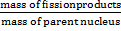 is
is
|
(a) Less than 1 |
|
(b) Greater than 1 |
|
(c) Equal to 1 |
|
(d) Depends on the mass of the parent nucleus |
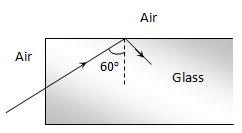
A light ray from air is incident (as shown in figure) at one end of a glass fiber (refractive index m = 1.5) making an incidence angle of 60o on the lateral surface, so that it undergoes a total internal reflection. How much time would it take to traverse the straight fiber of length 1 km
| (a) 3.33 m sec | (b) 6.67 m sec | (c) 5.77 m sec | (d) 3.85 m sec |
