MCQ
The net charge on a condenser is:
- Ainfinity
- Bq/ 2
- C2q
- Dzero
Explanation:
Every condenser is made with two plates. The charge on one plate is +Q and other is −Q.
Thus total charge of condenser is Qt = +Q - Q = 0
Generate a complete, print-ready paper with questions like this in minutes — across 16+ boards, with answer keys.
Monochromatic green light of wavelength 5  illuminates a pair of slits 1 mm apart. The separation of bright lines on the interference pattern formed on a screen 2 m away is
|
(a) 0.25 mm |
(b) 0.1 mm |
(c) 1.0 mm |
(d) 0.01 mm |
A magnet of magnetic moment M oscillating freely in earth's horizontal magnetic field makes n oscillations per minute. If the magnetic moment is quadrupled and the earth's field is doubled, the number of oscillations made per minute would be
(a) 
|
(b) 
|
(c) 2
|
(d)
|
In double slits experiment, for light of which colour the fringe width will be minimum
|
(a) Violet |
(b) Red |
(c) Green |
(d) Yellow |
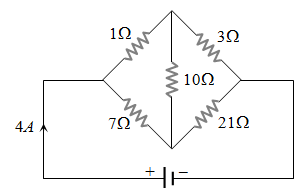
In the circuit shown in figure, the current drawn from the battery is 4A. If 10 W resistor is replaced by 20 W resistor, then current drawn from the circuit will be
|
(a) 1 A |
(b) 2 A |
(c) 3 A |
(d) 0 A |
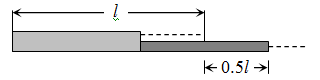
In order to quadruple the resistance of a uniform wire, a part of its length was uniformly stretched till the final length of the entire wire was 1.5 times the original length, the part of the wire was fraction equal to
|
(a) 1 / 8 |
(b) 1 / 6 |
(c) 1 / 10 |
(d) 1 / 4 |
Two identical coaxial circular loops carry current i each circulating in the clockwise direction. If the loops are approaching each other, then
|
(a) Current in each loop increases |
|
(b) Current in each loop remains the same |
|
(c) Current in each loop decreases |
|
(d) Current in one-loop increases and in the other it decreases |
The amplification factor of a triode valve is 15. If the grid voltage is changed by 0.3 volt the change in plate voltage in order to keep the plate current constant (in volt) is
|
(a) 0.02 |
(b) 0.002 |
(c) 4.5 |
(d) 5.0 |
Energy released in fusion of 1 kg of deuterium nuclei
|
(a) 8 |
(b) 6 |
(c) 2 |
(d) 8 |
When a glass rod is rubbed with silk, it
|
(a) Gains electrons from silk |
(b) Gives electrons to silk |
|
(c) Gains protons from silk |
(d) Gives protons to silk |


