Question
The ozone layer absorbs
|
(a) Infrared radiations |
(b) Ultraviolet radiations |
(c) X-rays |
(d) g-rays |
The ozone layer absorbs
|
(a) Infrared radiations |
(b) Ultraviolet radiations |
(c) X-rays |
(d) g-rays |
(b) Ultraviolet radiations
Generate a complete, print-ready paper with questions like this in minutes — across 16+ boards, with answer keys.
An antenna behaves as resonant circuit only when its length is
|
(a) |
(b) |
|
(c) |
(d) |
Light is an electromagnetic wave. Its speed in vacuum is given by the expression
|
(a) |
(b) |
(c) |
(d) |
The danger signals installed at the top of tall buildings are red in colour. These can be easily seen from a distance because among all other colours, the red light:
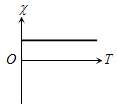
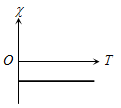
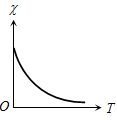
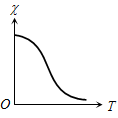
The variation of magnetic susceptibility (x) with temperature for a diamagnetic substance is best represented by
|
(a)
|
(b)
|
(c)
|
(d)
|
Carbon -14 decays with half-life of about 5,800 years. In a sample of bone, the ratio of carbon -14 to carbon -12 is found to be  of what it is in free air. This bone may belong to a period about x centuries ago, where x is nearest to
|
(a) 2 × 58 |
(b) 58 |
(c) 58/2 |
(d) 3 × 58 |