MCQ
The point(s), at which the function $f$ given by $f(x)=\left\{\begin{array}{l}\frac{x}{|x|}, x<0 \\ -1, x \geq 0\end{array}\right.$ is continuous, is/are
  • A
    $x \in R$
  • B
    $x=0$
  • C
    $x \in R-\{0\}$
  • D
    $x=-1$ and 1

Answer

We have, $f(x)=\left\{\begin{array}{ll}\frac{x}{|x|}, & x<0 \\ -1, & x \geq 0\end{array}\right.$
\[\begin{array}{l}
\Rightarrow f(x)=\left\{\begin{array}{cc}
\frac{x}{-x}=-1, & x<0 \\
-1, & x \geq 0
\end{array}\right. \\
\Rightarrow f(x)=-1 \forall x \in R
\end{array}\]
$\Rightarrow f(x)$ is continuous $\forall x \in R$ as it is a constant function.

Need a full question paper?

Generate a complete, print-ready paper with questions like this in minutes — across 16+ boards, with answer keys.
Start Generating Free

Similar questions

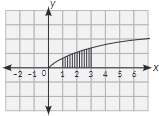
Shown below is the curve defined by the equation $y=\log (x+1)$ for $x \geq 0$.
Image
Which of these is the area of the shaded region?
If $\text{f}(\text{x})=\text{e}^{\cos^{-1}\big\{\sin\big(\text{x}+\frac{\pi}{3}\big)\big\}}$ then $\text{f}\Big(\frac{8\pi}{9}\Big)=$
  1. $\text{e}^{\frac{5\pi}{18}}$
  2. $\text{e}^{\frac{13\pi}{18}}$
  3. $\text{e}^{\frac{-2\pi}{18}}$
  4. $\text{none of these}$
The component of $i + j$ along $j + k$ will be
The corner point of the feasible region determined by the system of linear constraints are (0, 0), (0, 40), (20, 40), (60, 20), (60, 0). The objective function is Z = 4x + 3y. Compare the quantity in Column A and Column B.
Column A
Column B
Maximum of Z
325
  1. The quantity in column A is greater.
  2. The quantity in column B is greater.
  3. The two quantities are equal.
  4. The relationship cannot be determined On the basis of the information supplied.
The value of the $\tan\Big(\cos^{-1}\frac{4}{5}+\tan^{-1}\frac{2}{3}\Big)=$
  1. $\frac{6}{17}$
  2. $\frac{7}{16}$
  3. $\frac{16}{7}$
  4. None of these.
The minimum distance of a point on the curve $y = x^2 - 4$ from the origin is
Let $f$ be a differentiable function such that $f(1) = 2$ and $f\,'(x) = f(x)$ for all $x\in R.$ If $h(x) = f(f(x)),$ then $h'(1)$ is equal to
Let $f : X \rightarrow Y$ be a function such that $f(x) = \sqrt{x - 2} + \sqrt{4 - x} ,$ then the set of $X$ and $Y$ for which $f(x)$ is both injective as well as surjective, is-
If $f(x + ay,\;x - ay) = axy$, then $f(x,\;y)$ is equal to
Let $A=\left(\begin{array}{rrr}1 & -1 & 0 \\ 0 & 1 & -1 \\ 0 & 0 & 1\end{array}\right)$ and $B=7 A^{20}-20 A^{7}+2 I$, where $I$ is an identity matrix of order $3 \times 3$ If $B=\left[b_{i j}\right]$, then $b_{13}$ is equal to $....$