Question
The potential difference between the cathode and the target in a Collidge tube is 100 kV. The minimum wavelength of the X-rays emitted by the tube is(a) 0.66 Å(b) 9.38 Å(c) 0.246 Å(d) 0.123 Å
       

Answer

(d) 0.123 Å

Need a full question paper?

Generate a complete, print-ready paper with questions like this in minutes — across 16+ boards, with answer keys.
Start Generating Free

Similar questions

A capacitor of capacity $C_1$ is charged upto $V$ volt and then connected to an uncharged capacitor of capacity $C_2$. Then final potential difference across each will be
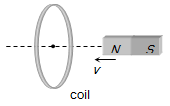
In the following figure, the magnet is moved towards the coil with a speed $v$ and induced $emf$ is $e.$ If magnet and coil recede away from one another each moving with speed $v,$ the induced $emf$ in the coil will be
A physical quantity is measured and the result is expressed as nu where u is the unit used and n is the numerical value. If the result is expressed in various units then:
  1. $\text{n}\propto\text{size of u}$
  2. $\text{n}\propto\text{u}^2$
  3. $\text{n}\propto\sqrt{\text{u}}$
  4. $\text{n}\propto\frac{1}{\text{u}}$
The electric resistance of a certain wire of iron is R. If its length and radius are both doubled, then:
An electromagnetic field exists only when there is.
A cube of a metal is given a positive charge Question: For this system, which of the following statements is true?
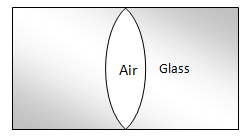
In the figure, an air lens of radii of curvature $10 \ cm (\mathrm{R}_1=\mathrm{R}_2= 10 \ cm)$ is cut in a cylinder of glass $(\mu = 1.5).$ The focal length and the nature of the lens is
A convex lens of focal length 25 cm and a concave lens of focal length 10 cm are joined together.  The power of the combination will be(a) – 16 D (b) + 16 D(c) – 6 D   (d) + 6 D
       
A circular coil of radius $5 \ cm$ has $500$ turns of a wire. The approximate value of the coefficient of self induction of the coil will be
Figure represents two simple harmonic motions. The parameter which has different values in the two motions is:
  1. Amplitude.
  2. Frequency.
  3. Phase.
  4. Maximum velocity.