MCQ
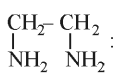
The proteins which are insoluble in water are
- ✓Fibrous proteins
- BGlobular proteins
- CBoth $(a)$ and $(b)$
- DNone of these
Generate a complete, print-ready paper with questions like this in minutes — across 16+ boards, with answer keys.

($A$) a high activation energy usually implies a fast reaction.
($B$) rate constant increases with increase in temperature. This is due to a greater number of collisions whose energy exceeds the activation energy.
($C$) higher the magnitude of activation energy, stronger is the temperature dependence of the rate constant.
($D$) the pre-exponential factor is a measure of the rate at which collisions occur, irrespective of their energy.
|
Exp. |
$[A]_0$ |
$[B]_0$ |
Rate (mole $s^{-1}$) |
|
$(1)$ |
$0.50$ |
$0.50$ |
$1.6 \times {10^{ - 4}}$ |
|
$(2)$ |
$0.50$ |
$1.00$ |
$3.2 \times {10^{ - 4}}$ |
|
$(3)$ |
$1.00$ |
$1.00$ |
$3.2 \times {10^4}$ |
Under standard conditions, the number of moles of $M ^{+}$oxidized when one mole of $X$ is converted to $Y$ is $\left[ F =96500 \ C \ mol ^{-1}\right]$