MCQ
The reciprocal of resistance is
  • A
    reactance
  • B
    mobility
  • C
    conductivity
  • conductance

Answer

Correct option: D.
conductance
d
Conductance $=\frac{1}{\text { Resistance }}$

Need a full question paper?

Generate a complete, print-ready paper with questions like this in minutes — across 16+ boards, with answer keys.
Start Generating Free

Similar questions

Four equal resistance dissipated $5 \,W$ of power together when connected in series to a battery of negligible internal resistance. The total power dissipated in these resistance when connected in parallel across the same battery would be ........... $W$
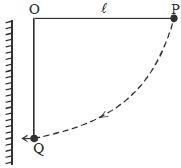
$Bob$ of a pendulum is left from position $P$, velocity of image on mirror $M$ of $ bob$ at position $Qwr$ to $bob$ is
Two rods of same material and length have their electric resistance in ratio 1 : 2. When both rods are dipped in water, the correct statement will be
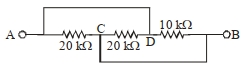
The equivalent resistance between $A$ and $B$ as shown in figure is $........\,k\Omega$
The alternating voltage induced in the secondary coil of a transformer is mainly due to
Suppose the charge of a proton and an electron differ slightly. One of them is $-e,$ the other is $(e + \Delta e).$ If the net of electrostatic force and gravitational force between two hydrogen atoms placed at a distanced (much greater than atomic size) apart is zero, then $\Delta e$ is of the order of $[$ Given: mass of hydrogen $m_h = 1.67 \times 10^{- 27}\,\, kg]$
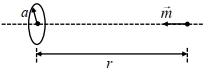
A special metal $S$ conducts electricity without any resistance. A closed wire loop, made of $S$, does not allow any change in flux through itself by inducing a suitable current to generate a compensating flux. The induced current in the loop cannot decay due to its zero resistance. This current gives rise to a magnetic moment which in turn repels the source of magnetic field or flux. Consider such a loop, of radius $a$, with its center at the origin. A magnetic dipole of moment $m$ is brought along the axis of this loop from infinity to a point at distance $r \gg a)$ from the center of the loop with its north pole always facing the loop, as shown in the figure below.

The magnitude of magnetic field of a dipole $m$, at a point on its axis at distance $r$, is $\frac{\mu_0}{2 \pi} \frac{m}{r^3}$, where $\mu_0$ is the permeability of free space. The magnitude of the force between two magnetic dipoles with moments, $m_1$ and $m_2$, separated by a distance $r$ on the common axis, with their north poles facing each other, is $\frac{k m_1 m_2}{r^4}$, where $k$ is a constant of appropriate dimensions. The direction of this force is along the line joining the two dipoles.

($1$) When the dipole $m$ is placed at a distance $r$ from the center of the loop (as shown in the figure), the current induced in the loop will be proportional to

$(A)$ $\frac{m}{r^3}$ $(B)$ $\frac{m^2}{r^2}$ $(C)$ $\frac{m}{r^2}$ $(D)$ $\frac{m^2}{r}$

($2$) The work done in bringing the dipole from infinity to a distance $r$ from the center of the loop by the given process is proportional to

$(A)$ $\frac{m}{r^5}$ $(B)$ $\frac{m^2}{r^5}$ $(C)$ $\frac{m^2}{r^6}$ $(D)$ $\frac{m^2}{r^7}$

Give the answer or qution ($1$) and ($2$)
A girl brings a positively charged rod near a thin neutral stream of water flowing from a tap. She observes, that the water stream, bends towards her. Instead, if she is to bring a negativity charged rod near to the stream, it will:
The resistance of an ammeter is $13\, \Omega$ and its scale is graduated for a current upto $100$ $amps$. After an additional shunt has been connected to this ammeter it becomes possible to measure currents upto $750$ $ampere$ by this meter. The value of shunt-resistance is 
The number of photons of wavelength 540 nm emitted per second by an electric bulb of power 100W is (taking $\mathrm {h} = 6\times 10^{-34} \mathrm{~J}-\mathrm{sec}$)