MCQ
The restoring couple in the moving coil galvanometer is due to:
  • A
    Current in the coil
  • B
    Magnetic field of the magnet.
  • C
    Material of the coil.
  • Twist produced in the suspension wire.

Answer

Correct option: D.
Twist produced in the suspension wire.

When coil rotates the spring is twisted and it exerts an opposing torque on the coil.

Need a full question paper?

Generate a complete, print-ready paper with questions like this in minutes — across 16+ boards, with answer keys.
Start Generating Free

Similar questions

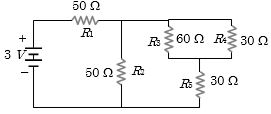
In circuit shown below, the resistances are given in $ohms$ and the battery is assumed ideal with emf equal to $3\, volt$. The voltage across the resistance $R_4$ is ................. $V$
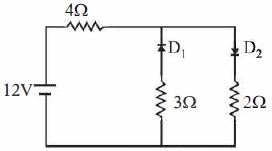
The circuit has two oppositively connected ideal diodes in parallel. What is the current flowing in the circuit?......$A$
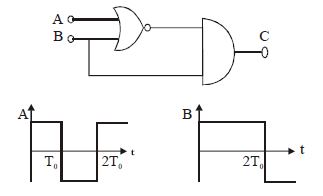
Correct output for given logic circuit and inputs is 
According to Maxwell’s hypothesis, a changing electric field gives rise to
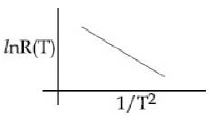
In an experiment, the resistance of a material is plotted as a function of temperature (in some range). As shown in the figure, it is a straight line. One may conclude that:
In sum and difference method in vibration magnetometer, the time period is more if
The space inside a straight current carrying solenoid is filled with a magnetic material having magnetic susceptibility equal to $1.2 \times 10^{-5}$. What is fractional increase in the magnetic field inside solenoid with respect to air as medium inside the solenoid?
The X-rays produced in a coolidge tube of potential difference 40V have minimum wavelength of 
A bar magnet having a magnetic moment of $2 \times 10^4 \,\,JT^{-1}$ is free to rotate in a horizontal plane. A horizontal magnetic field $B = 6  \times 10^{-4 } \,\,T$ exists in the space. The work done in taking the magnet slowly from a direction parallel to the field to a direction $60^o $ from the field is.....$J$
For a convex lens the distance of the object is taken on $X$-axis and the distance of the image is taken on $Y$-axis, the nature of the graph so obtained is