MCQ
The strongest base is
  • $N{H_3}$
  • B
    $P{H_3}$
  • C
    $As{H_3}$
  • D
    $Sb{H_3}$

Answer

Correct option: A.
$N{H_3}$
a
(a) $N{H_3}$ is a strongest base because Lone pair is easily available for donation.

Need a full question paper?

Generate a complete, print-ready paper with questions like this in minutes — across 16+ boards, with answer keys.

Start Generating Free

Similar questions

Which of the following has maximum boiling point
Which of the following ester will give always $S_N2$ mechanism in acidic as well as basic conditions ?
In which of the following pairs of compounds the ratio of $C, H$ and $O$ is same
An organic compound on analysis gave $C = 48\, gm$, $H = 8 \,gm$ and $N = 56\, gm$. Volume of $1.0\, g$ of the compound was found to be $200 \,ml$ at $NTP$. Molecular formula of the compound is
Ortho-Nitrophenol is less soluble in water than $p-$ and $m-$­Nitrophenols because :
In which of the following gaseous equilibrium an increase in pressure will increase the yield of the products
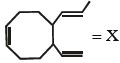
$(i)$ Number of geometrical isomers for (image)

$(ii)$ Number of cyclic structural isomers with molecular formula $C_5H_{10} = Y$

$(iii)$ Number of ether with $M.F. C_4H_{10}O = Z ;X + Y + Z$ is
 

The transition metal ions responsible for colour in ruby and emerald are, respectively
Dilution processes of different aqueous solutions, with water, are given in $LIST-I$. The effects of dilution of the solutions on $\left[ H ^{+}\right]$ are given in $LIST-II.($Note: Degree of dissociation $( \alpha )$ of weak acid and weak base is $<<1$; degree of hydrolysis of salt $<<1 ;\left[ H ^{+}\right]$ represents the concentration of $H ^{+}$ ions$)$
$LIST-I$ $LIST-II$
$P(10 \ mL $ of  $0.1 M NaOH +20 \ mL$ of $0.1 M $  acetic acid$)$ diluted to  $60 \ mL$ $1$ the value of $\left[ H ^{+}\right]$ does not change on dilution
$Q (20 \ mL $ of $ 0.1 \ M \ NaOH +20 \ mL $ of $0.1 \ M $ acetic acid$)$ diluted to $ 80\ mL$ $2$ the value of $\left[ H ^{+}\right]$ changes to half of its initial value on dilution the value of $\left[ H ^{+}\right]$ changes to two times of its initial value on dilution
$R(20 \ mL $ of $ 0.1 \ M HCl +20 \ mL$ of $0.1 \ M$ ammonia solution$)$ diluted to $80 \ mL$ $3$ the value of $\left[ H ^{+}\right]$changes to $1 / \sqrt{2}$ times of its initial value on dilution
$S10 \ mL$ saturated solution of Ni $( OH )_2$ in equilibrium with excess
solid  Ni $( OH )_2$ s diluted to  $20 \ mL ($solid  Ni $( OH )_2$ is still present afterdilution$).$
$4$the value of $\left[ H ^{+}\right]$changes to $\sqrt{2}$ times of its initial value on dilution
  $5$ the value of $\left[ H ^{+}\right]$changes to $\sqrt{2}$ times of its initial value on dilution
Match each process given in $LIST-I$ with one or more effect$(s)$ in $LIST-II$. The correct option is
The compound that is most difficult to protonate is