MCQ
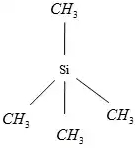
The structure and hybridisation of $Si{(C{H_3})_4}$ is
  • A
    Bent, $sp$
  • B
    Trigonal, $s{p^2}$
  • C
    Octahedral, $s{p^3}d$
  • Tetrahedral, $s{p^3}$

Answer

Correct option: D.
Tetrahedral, $s{p^3}$
d
The structure and hybridization of $Si \left( CH _3\right)_4$ is tetrahedral and $sp ^3-$ hybridisation because $Si$ forms $4$ bond pairs.

Need a full question paper?

Generate a complete, print-ready paper with questions like this in minutes — across 16+ boards, with answer keys.
Start Generating Free

Similar questions

Reagent $(A)$ and $(B)$ in above reaction are
(image) $+ PhMgBr_{(excess)} \to  P \xrightarrow{{{H_2}O}} Q$ ;

$Q$ is

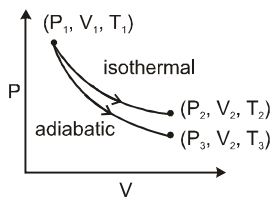
The reversible expansion of an ideal gas under adiabatic and isothermal conditions is shown in the figure. Which of the following statement$(s)$ is (are) correct? $Image$ 

$(A)$ $T _1= T _2$ $(B)$ $T _3> T _1$

$(C)$ $W _{\text {isothermal }} > W _{\text {adiabatic }}$ $(D)$ $\Delta U_{\text {isothermal }}>\Delta U_{\text {adiabatic }}$

Consider the following reversible reaction,$A ( g )+ B ( g ) \rightleftharpoons AB ( g ) \text {. }$
The activation energy of the backward reaction exceeds that of the forward reaction by $2RT$ (in $J mol ^{-1}$ ). If the pre-exponential factor of the forward reaction is $4$ times that of the reverse reaction, the absolute value of $\Delta G ^{\ominus}$ (in $J mol ^{-1}$ ) for the reaction at $300 K$ is $ . . . ($Given; $\ln (2)=0.7, RT =2500 J mol ^{-1}$ at $300 K$ and $G$ is the Gibbs energy$)$
$CH_3 -C \equiv C-CH$ $\xrightarrow[{(2)\,{H_2}O}]{{(1)\,\,{O_3}}}X\xrightarrow[\Delta ]{{\left( {NaOH + CaO} \right)}}Y$; $Y$ is
Fluorination of an aromatic ring is easily accomplished by treating a diazonium salt with $HBF_4$. Which of the following conditions is correct about this reaction?
Among the following organic acids, the acid present in rancid butter is
The maximum energy is possessed by an electrons, when it is present
....... $gm$ amount of $KCl\,\,(M_w = 74.5)$ required to depress the freezing point of $1000 \,g$ of water by $2K$ . $(K_f = 1.86)$
How many products will be formed in above reaction ?