MCQ
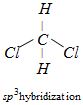
The structure of di-chloromethane is
  • Tetrahedral
  • B
    Trigonal
  • C
    Linear
  • D
    Hexagonal

Answer

Correct option: A.
Tetrahedral
(a) Tetrahedral structure

Need a full question paper?

Generate a complete, print-ready paper with questions like this in minutes — across 16+ boards, with answer keys.

Start Generating Free

Similar questions

The name of ${H_3}C - \mathop {\mathop {CH}\limits_{|\,\,\,\,\,\,\,\,} }\limits_{C{H_3}} - \mathop {\mathop {CH}\limits_{|\,\,\,\,\,\,\,} }\limits_{OH} - C{H_3}$ $IUPAC$ nomenclature system is
The number of electrons to balance the following equation $NO_3^ - + 4{H^ + } + {e^ - }\, \to \,2{H_2}O + NO$ is
In $CO_2, C$ is $sp$ hybridised using $s$ and $p_x$ orbitals then
$50\, mL$ of $0.1\, M$ solution of a salt reacted with $25\, mL$ of $0.1\, M$ solution of sodium sulphite. The half reaction for the oxidation of sulphite ion is

$SO{{_{3}^{2-}}_{\left( aq. \right)}}+{{H}_{2}}{{O}_{\left( l \right)}}\to SO{{_{4}^{2-}}_{\left( aq. \right)}}+2{{H}^{+}}_{\left( aq. \right)}+2{{H}^{+}}_{\left( aq. \right)}+2{{e}^{-}}$

If the oxidation number of metal in the salt was $+3$, what would be the new oxidation number of metal?
Which of the following has more unpaired $d$-electrons
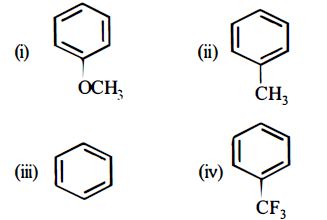
In the below mentioned compounds the decreasing order of reactivity towards electrophilic substitution is
Which of the following statement is correct about ionization potential?
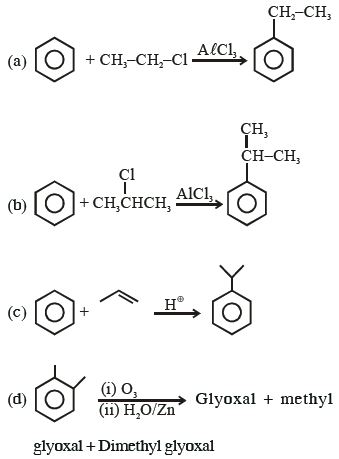
Correctly matched products are
Arrange the anions ${\rm{(p) }}\overline {\rm{C}} {{\rm{H}}_{\rm{3}}}{\rm{, (q) }}\overline {\rm{N}} {{\rm{H}}_{\rm{2}}}{\rm{, (r) O}}{{\rm{H}}^ - }{\rm{ , (s) }}{{\rm{F}}^ - }$ , in decreasing order of their basic strength.
One weak acid (like $C{H_3}COOH$) and its strong base together with salt (like $C{H_3}COONa$) is a buffer solution. In which pair this type of characteristic is found