MCQ
The sum, $\sum\limits_{n=1}^{7} \frac{n(n+1)(2 n+1)}{4}$ is equal to
  • A
    $521$
  • B
    $663$
  • $504$
  • D
    $429$

Answer

Correct option: C.
$504$
c
$\frac{1}{4}\left(\sum_{n=1}^{7} 2 n^{3}+\sum_{n=1}^{7} 3 n^{2}+\sum_{n=1}^{7} n\right)$

$=\frac{1}{4}\left(2\left(\frac{7 \times 8}{2}\right)^{2}+3\left(\frac{7 \times 8 \times 15}{6}\right)+\frac{7 \times 8}{2}\right)$

$=504$

Need a full question paper?

Generate a complete, print-ready paper with questions like this in minutes — across 16+ boards, with answer keys.

Start Generating Free

Similar questions

$\lim\limits_{x \rightarrow 0}\left(\frac{3 x^{2}+2}{7 x^{2}+2}\right)^{\frac{1}{x^{2}}}$ is equal to
Let $P(n)=5^n-2^n \cdot P(n)$ is divisible by $3 \lambda$ where $\lambda$ and $n$ both are odd positive integers, then the least value of $n$ and $\lambda$ will be.
If $\sum\limits_{ k =1}^{31}\left({ }^{31} C _{ k }\right)\left({ }^{31} C _{ k -1}\right)-\sum\limits_{ k =1}^{30}\left({ }^{30} C _{ k }\right)\left({ }^{30} C _{ k -1}\right)=\frac{\alpha(60 !)}{(30 !)(31 !)}$

Where $\alpha \in R$, then the value of $16 \alpha$ is equal to

If $3^x=4^{x-1}$, then $x=$

$(A)$ $\frac{2 \log _3 2}{2 \log _3 2-1}$ $(B)$ $\frac{2}{2-\log _2 3}$ $(C)$ $\frac{1}{1-\log _4 3}$ $(D)$ $\frac{2 \log _2 3}{2 \log _2 3-1}$
A hyperbola has its centre at the origin, passes through the point $(4, 2)$ and has transverse axis of length $4$ along the $x -$ axis. Then the eccentricity of the hyperbola is
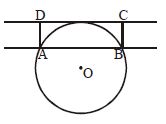
A variable straight line $AB$ divides the circumference of the circle $x^2 + y^2 = 25$ in the ratio $1 : 2$ . If a tangent $CD$ is drawn to the smaller arc parallel to $AB$ , such that $ABCD$ is a rectangle, then locus of $C$ & $D$ is (as shown in the figure) 
The expression $\frac{2^2+1}{2^2-1}+\frac{3^2+1}{3^2-1}+\frac{4^2+1}{4^2-1}+\ldots+\frac{(2011)^2+1}{(2011)^2-1}$ lies in the interval
If $\alpha$ satisfies the equation $x^2+x+1=0$ and $(1+\alpha)^7=\mathrm{A}+\mathrm{B} \alpha+\mathrm{C}^2, \mathrm{~A}, \mathrm{~B}, \mathrm{C} \geq 0$, then $5(3 A-2 B-C)$ is equal to..........................
$ABCD$ is a rhombus. Its diagonals $AC$ and $BD$ intersect at the point $M$ and satisfy $BD = 2AC$. If the points $D$ and $M$ represents the complex numbers $1 + i$ and $2 - i$ respectively, then $A$ represents the complex number
If ${\log _{\sqrt 3 }}\left( {\frac{{|z{|^2} - |z| + 1}}{{2 + |z|}}} \right) < 2$, then the locus of $z$ is