MCQ
The value of $\int\limits_0^1 {9{x^8}dx + \int\limits_0^{\pi /2} {\cos \,x\,dx} } $ is
  • A
    $1$
  • B
    $3$
  • C
    $4$
  • $2$

Answer

Correct option: D.
$2$
d

Need a full question paper?

Generate a complete, print-ready paper with questions like this in minutes — across 16+ boards, with answer keys.

Start Generating Free

Similar questions

The number of ways in which $10$ persons can go in two boats so that there may be $5 $ on each boat, supposing that two particular persons will not go in the same boat is
Let $P\left(x_1, y_1\right)$ and $Q\left(x_2, y_2\right), y_1<0, y_2<0$, be the end points of the latus rectum of the ellipse $x^2+4 y^2=4$. The equations of parabolas with latus rectum $P Q$ are

$(A)$ $x^2+2 \sqrt{3} y=3+\sqrt{3}$

$(B)$ $x^2-2 \sqrt{3} y=3+\sqrt{3}$

$(C)$ $x^2+2 \sqrt{3} y=3-\sqrt{3}$

$(D)$ $x^2-2 \sqrt{3} y=3-\sqrt{3}$
If $\theta = {\sin ^{ - 1}}[\sin ( - {600^o})]$, then one of the possible value of $\theta $ is
The radius of the smallest circle which touches the parabolas $y=x^2+2$ and $x=y^2+2$ is
The number of all $3-$digit numbers $a b c$ (in base $10$ ) for which $(a \times b \times c)+(a \times b)+$ $(b \times c)+(c \times a)+a+b+c=29$ is
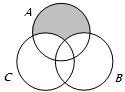
The shaded region in the given figure is
Coefficient of $x^{n-6}$ in the expansion $n\left[ {x - \left( {\frac{{^n{C_0}{ + ^n}{C_1}}}{{^n{C_0}}}} \right)} \right]\left[ {\frac{x}{2} - \left( {\frac{{^n{C_1}{ + ^n}{C_2}}}{{^n{C_1}}}} \right)} \right]\left[ {\frac{x}{3} - \left( {\frac{{^n{C_2}{ + ^n}{C_3}}}{{^n{C_2}}}} \right)} \right].....$ $ \left[ {\frac{x}{n} - \left( {\frac{{^n{C_{n - 1}}{ + ^n}{C_n}}}{{^n{C_{n - 1}}}}} \right)} \right]$ is equal to (where $n = n . (n -1) . (n -2).... 3.2.1$ )
The number of ways of selecting $15$ teams from $15$ men and $15$ women, such that each team consists of a man and a woman, is
If the mirror image of the point $\mathrm{P}(3,4,9)$ in the line $\frac{x-1}{3}=\frac{y+1}{2}=\frac{z-2}{1}$ is $(\alpha, \beta, \gamma)$, then $14(\alpha+\beta+\gamma)$ is :
Let $A = \left[ {\begin{array}{*{20}{c}}1&0&0\\5&2&0\\{ - 1}&6&1\end{array}} \right]$, then the adjoint of $ A $ is