The wavelength of radiation emitted by a body depends upon
Easy


Download our appand get started for free
Experience the future of education. Simply download our apps or reach out to us for more information. Let's shape the future of learning together!No signup needed.*
Similar Questions
- 1View SolutionIn which process, the rate of transfer of heat is maximum
- 2A black body at a temperature of $1640\,\,K$ has the wavelength corresponding to maximum emission equal to $1.75 \,\,\mu m.$ Assuming the moon to be a perfectly black body, the temperature of the moon, if the wavelength corresponding to maximum emission is $14.35\,\,\mu m$ is.......$K$View Solution
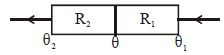
- 3Consider two insulating sheets with thermal resistances $R_1$ and $R_2$ as shown. The temperatures $\theta $ isView Solution
- 4View SolutionMud houses are cooler in summer and warmer in winter because
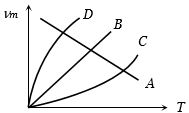
- 5Which of the following is the $\nu_m = T$ graph for a perfectly black body ($\nu_m$ =maximum frequency of radiation)View Solution
- 6A black body at a temperature of $127°C$ radiates heat at the rate of $1 cal/cm^2 × sec$. At a temperature of $527°C$ the rate of heat radiation from the body in ($cal/cm^2 × sec$) will beView Solution
- 7A beaker full of hot water is kept in a room. If it cools from $80^{\circ} C$ to $75^{\circ} C$ in $t_1$, minutes, from $75^{\circ} C$ to $70^{\circ} C$ in $t_2$ minutes and from $70^{\circ} C$ to $65^{\circ} C$ in $t_3$ minutes, thenView Solution
- 8A certain stellar body has radius $50 \,R_{s}$ and temperature $2 \,T_{s}$ and is at a distance of $2 \times 10^{10} \,AU$ from the earth. Here, $AU$ refers to the earth-sun distance and $R_{s}$ and $T_{s}$ refer to the sun's radius and temperature, respectively. Take, both star and sun to be ideal black bodies. The ratio of the power received on earth from the stellar body as compared to that received from the sun is close toView Solution
- 9If a metallic sphere gets cooled from ${62^o}C$ to ${50^o}C$ in ${40^o}C$and in the next $10\;\min utes$gets cooled to ${42^o}C$, then the temperature of the surroundings is ......... $^oC$View Solution
- 10Spheres $P$ and $Q$ are uniformly constructed from the same material which is a good conductor of heat and the radius of $Q$ is thrice the radius of $P$. The rate of fall of temperature of $P$ is $x$ times that of $Q$ when both are at the same surface temperature. The value of $x$ is :View Solution