Question
The work function of three metals $A , B$ and C are $1.92 eV , 2 eV , 5 eV$ respectively. On the basis of Einstein equation, when radiation of wavelength 4100 Å is used, the emission of electrons will be :

Answer

(C) - Only from metal A and B

Need a full question paper?

Generate a complete, print-ready paper with questions like this in minutes — across 16+ boards, with answer keys.
Start Generating Free

Similar questions

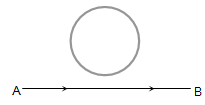
An electron moves along the line$ AB,$ which lies in the same plane as a circular loop of conducting wires as shown in the diagram. What will be the direction of current induced if any, in the loop
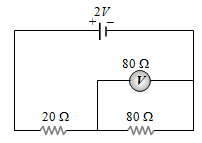
In the adjoining circuit, the e.m.f. of the cell is $2$ volt and the internal resistance is negligible. The resistance of the voltmeter is $80$ ohm. The reading of the voltmeter will be
When the reflecting or refracting rays do not actually intersect but appear to intersect when produced backwards, 
An object is immersed in a fluid. In order that the object becomes invisible, it should(a) Behave as a perfect reflector(b) Absorb all light falling on it(c) Have refractive index one(d) Have refractive index exactly matching with that of the surrounding fluid


Which of the following is not a mode of radioactive decay?
To reduce the reasonant frequency in an LCR series circuit with a generator:
In image formation from spherical mirrors, only paraxial rays are considered because they:
Before using the tangent galvanometer, its coil is set in 
In a PN-junction(a) P and N both are at same potential(b) High potential at N side and low potential at P side(c) High potential at P side and low potential at N side(d) Low potential at N side and zero potential at P side


In a semiconductor(a) There are no free electrons at any temperature(b) The number of free electrons is more than that in a conductor(c) There are no free electrons at 0 K(d) None of these