Question
This question has Statement $1$ and Statement $2.$ Of the four choices given after the Statements, choose the one that best describes the two Statements.

Statement $1:$ A metallic surface is irradiated by a monochromatic light of frequency $v > v_0$ (the threshold frequency). If the incident frequency is now doubled, the photocurrent and the maximum kinetic energy are also doubled.

Statement $2:$ The maximum kinetic energy of photoelectrons emitted from a surface is linearly dependent on the frequency of the incident light. The photocurrent depends only on the intensity of the incident light.
Answer

The maximum kinetic energy of photoelectrons depends upon frequency on incident light and photo current depends upon intensity of incident light.

Need a full question paper?

Generate a complete, print-ready paper with questions like this in minutes — across 16+ boards, with answer keys.

Start Generating Free

Similar questions

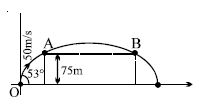
At $t = 0$ a projectile is fired from a point $O$(taken as origin) on the ground with a speed of $50\,\, m/s$ at an angle of $53^o$ with the horizontal. It just passes two points $A \& B$ each at height $75 \,\,m$ above horizontal as shown. The horizontal separation between the points $A$ and $B$ is ........ $m$
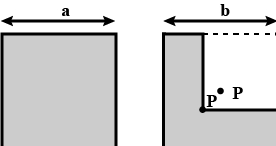
A uniform square wooden sheet of side $a$ has its centre of mass located at point $O$ as shown in the figure below on the left. A square portion of side $b$ of this sheet is cut out to produce an $L$-shaped sheet as shown in the figure on the right.The centre of mass of the L-shaped sheet lies at the point $P$ (in the above diagram), when
A truck of mass $10,000\, kg$ moves up an inclined plane rising $1$ in $50$ with a speed of $36\, km/h$. Find the power of engine .................. $\mathrm{kW}$  $(g = 10\, m/s^2$)
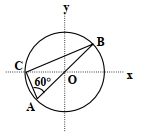
Consider a system of three charges $\frac{\mathrm{q}}{3}, \frac{\mathrm{q}}{3}$ and $-\frac{2 \mathrm{q}}{3}$ placed at points $\mathrm{A}, \mathrm{B}$ and $\mathrm{C}$, respectively, as shown in the figure,

Take $\mathrm{O}$ to be the centre of the circle of radius $\mathrm{R}$ and angle $\mathrm{CAB}=60^{\circ}$

Figure:$Image$ 

A copper rod $2\,m$ long has a circular cross-section of radius $1\, cm$. One end is kept  at $100^o\,C$ and the other at $0^o\,C$ and the surface is covered by nonconducting material to check the heat losses through the surface. The thermal  resistance of the bar in degree kelvin per watt is (Take thermal conductivity $K = 401\, W/m-K$ of copper):-
A capacitor of capacitance $15 \,nF$ having dielectric slab of $\varepsilon_{r}=2.5$ dielectric strength $30 \,MV / m$ and potential difference $=30\; volt$ then the area of plate is ....... $ \times 10^{-4}\; m ^{2}$
In a transistor the base is made very thin and is lightly doped with an impurity because
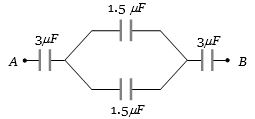
The capacitance between the points $A$ and $B$ in the given circuit will be.......$\mu \,F$
$A$ wire of length $L$ and $3$ identical cells of negligible internal resistances are connected in series. Due to the current, the temperature of the wire is raised by $\Delta T$ in time $t. N$ number of similar cells is now connected in series with a wire of the same material and cross section but of length $2L$. The temperature of the wire is raised by the same amount $\Delta T$ in the same time $t$. The value of $N$ is :
Work done by $0.1$ mole of a gas at ${27^o}C$ to double its volume at constant pressure is ....... $cal$ ($R = 2 \,cal\, mol^{-1}$ $^oC^{-1}$)