MCQ
To increase the angular magnification of a simple microscope, one should increase:
  • A
    The focal length of the lens.
  • The power of the lens.
  • C
    The aperture of the lens.
  • D
    The object size.

Answer

Correct option: B.
The power of the lens.
For a simple microscope in normal adjustment, the object is placed at a distance equal to f (the ​focal length) from the lens, And the angular magnification is given by the relation
$\text{m}=\frac{\text{D}}{\text{f}}$
for $\text{u}<\text{f},\text{m}=\frac{\text{D}}{\text{f}}+1$
power of lens $=\frac{1}{\text{f}}$
Angular magnification depends on power.

Need a full question paper?

Generate a complete, print-ready paper with questions like this in minutes — across 16+ boards, with answer keys.
Start Generating Free

Similar questions

The radius of the shortest orbit in a one$-$electron system is $18\ pm.$ It may be
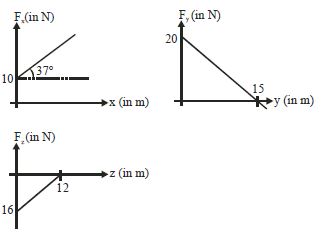
The components of a force acting on a particle are varying according to the graphs shown. To reach at point $B\, (8, 20, 0)$ from point $A\,(0, 5, 12)$ the particle moves on paths parallel to $x-$ axis then $y-$ axis and then $z-$ axis, then work done by this force is ............ $\mathrm{J}$
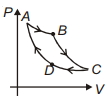
Carnot cycle is plotted in $P-V$ graph. Which portion represents an isothermal expansion?
A calorimeter contains $0.2\, kg$ of water at $30\,^oC$, $0.1\,kg$ of water at $60\,^oC$ is added to it, the mixture is well stirred and the resulting temperature is found to be $35\,^oC$. The thermal capacity of calorimeter is .......... $J/K$
An electron is moving along the positive $x-$axis. You want to apply a magnetic field for a short time so that the electron may reverse its direction and move parallel to the negative $x-$axis. This can be done by applying the magnetic field along:
A train starts from rest from a station with acceleration $0.2 \,m / s ^2$ on a straight track and then comes to rest after attaining maximum speed on another station due to retardation $0.4 \,m / s ^2$. If total time spent is half an hour, then distance between two stations is [Neglect length of train]
Beats are produced by two waves given by ${y_1} = a\sin 2000\,\pi t$ and ${y_2} = a\sin 2008\,\pi t$. The number of beats heard per second is
$A$ block of mass $m$ moving with a velocity $v_0$ on a smooth horizontal surface strikes and compresses a spring of stiffness $k$ till mass comes to rest as shown in the figure. This phenomenon is observed by two observers:

$A$: standing on the horizontal surface

$B$: standing on the block To an observer

$A$, the work done by the normal reaction $N$ between the block and the spring on the block is

Two particles are moving along two long straight lines, in the same plane, with the same speed $= 20 \,\,cm/s$. The angle between the two lines is $60^o$, and their intersection point is $O$. At a certain moment, the two particles are located at distances $3\,m$ and $4\,m$ from $O$, and are moving towards $O$. Subsequently, the shortest distance between them will be
If ${E}$ and ${H}$ represents the intensity of electric field and magnetising field respectively, then the unit of $E/H$ will be :