Question

Two identical light sources S1 and S2 emit light of same wavelength l. These light rays will exhibit interference if

(a) Their phase differences remain constant

(b) Their phases are distributed randomly

(c) Their light intensities remain constant

(d) Their light intensities change randomly

Answer

(a) Their phase differences remain constant

Need a full question paper?

Generate a complete, print-ready paper with questions like this in minutes — across 16+ boards, with answer keys.

Start Generating Free

Similar questions

The force with which a magnet attracts objects like iron is called ....................... .
"The work per unit of charge required to move a charge from a reference point to a specified point, measured in joules per coulomb or volts. The static electric field is the negative of the gradient of the electric potential." comments are given below, select the correct one:
Two ions have equal masses but one is singly-ionised and the other is doubly-ionised. They are projected from the same place in a uniform magnetic field with the same velocity perpendicular to the field.

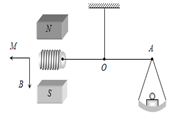
A small coil C with N = 200 turns is mounted on one end of a balance beam and introduced between the poles of an electromagnet as shown in figure. The cross sectional area of coil is A= 1.0 cm2, length of arm OA of the balance beam is l = 30 cm. When there is no current in the coil the balance is in equilibrium. On passing a current I = 22 mA through the coil the equilibrium is restored by putting the additional counter weight of mass ∆m = 60 mg on the balance pan. Find the magnetic induction at the spot where coil is located.

(a) 0.4 T

(b) 0.3 T

(c) 0.2 T

(d) 0.1 T

If the frequency of light in a photoelectric experiment is doubled, the stopping potential will:

To make the field radial in a moving coil galvanometer

(a) The number of turns in the coil is increased

(b) Magnet is taken in the form of horse-shoe

(c) Poles are cylindrically cut

(d) Coil is wounded on aluminium frame

A transistor has three impurity regions. All the three regions have different doping levels. In order of increasing doping level, the regions are:
The theory of quantisation of electric charge was given by:

Lux is equal to

(a) 1 lumen/m2

(b) 1 lumen/cm2

(c) 1 candela/m2

(d) 1 candela/cm2

A hole diffuses from the p-side to the n-side in a p-n junction. This means that.