MCQ
A transistor has three impurity regions. All the three regions have different doping levels. In order of increasing doping level, the regions are:
  • A
    Emitter, base and collector.
  • B
    Collector, base and emitter.
  • C
    Base, emitter and collector.
  • D
    Base, collector and emitter.

Answer

  1. Base, collector and emitter.

Need a full question paper?

Generate a complete, print-ready paper with questions like this in minutes — across 16+ boards, with answer keys.

Start Generating Free

Similar questions

Two concentric coils each of radius equal to 2π cm are placed at right angles to each other. 3 ampere and 4 ampere are the currents flowing in each coil respectively. The magnetic induction in   at the centre of the coils will be (

(a) 5 

(b) 7  

(c) 12  

(d)   

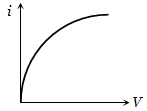
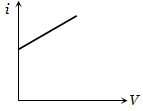
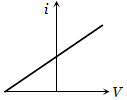
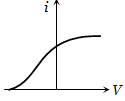
The curve between current (i) and potential difference (V) for a photo cell will be

(a)

(b)

(c)

(d)

Which of the following effects could not be explained by Maxwell's electromagnetic wave theory?
Following operations can be performed on a capacitor:
X - connect the capacitor to a battery of emf $\in.$
Y - disconnect the battery.
Z - reconnect the battery with polarity reversed.
W - insert a dielectric slab in the capacitor.
  1. In XYZ (perform X, then Y, then Z) the stored electric energy remains unchanged and no thermal energy is developed.
  2. The charge appearing on the capacitor is greater after the action XWY than after the action XYW.
  3. The electric energy stored in the capacitor is greater after the action WXY than after the action XYW.
  4. The electric field in the capacitor after the action XW is the same as that after WX.

Four lowest energy levels of H-atom are shown in the figure. The number of possible emission lines would be

(a) 3 

(b) 4

(c) 5  

(d) 6

If a wire of resistance R is melted and recasted to half of its length, then the new resistance of the wire will be

(a) R/4    

(b) R/2

(c) R 

(d) 2R

The purpose of cathode in cathode ray tube is ______:
The work done by all the forces (external and internal) on a system equals the change in:
  1. Total energy.
  2. Kinetic energy.
  3. Potential energy.
  4. None of these.

What is the effective capacitance between points X and  Y

(a) 24 μF   

(b) 18 μF

(c) 12 μF

(d) 6 μF

Human eye: