Two pendulum have time periods $T$ and $5T/4$. They start $SHM$ at the same time from the mean position. After how many oscillations of the smaller pendulum they will be again in the same phase
Medium


Download our appand get started for free
Experience the future of education. Simply download our apps or reach out to us for more information. Let's shape the future of learning together!No signup needed.*
Similar Questions
- 1For a particle showing motion under the force $F=-5(x-2)$, the motion is ...........View Solution
- 2A particle is executing $S.H.M.$ with total mechanical energy $90 \,J$ and amplitude $6 \,cm$. If its energy is somehow decreased to $40 \,J$ then its amplitude will become ........ $cm$View Solution
- 3A pendulum with time period of $1\, s$ is losing energy due to damping. At certain time its energy is $45\, J$. If after completing $15\,oscillations$ , its energy has become $15\, J$, its damping constant (in $s^{-1}$ ) isView Solution
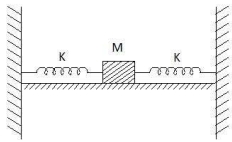
- 4In the figure given below. a block of mass $M =490\,g$ placed on a frictionless table is connected with two springs having same spring constant $\left( K =2 N m ^{-1}\right)$. If the block is horizontally displaced through ' $X$ 'm then the number of complete oscillations it will make in $14 \pi$ seconds will be $.........$View Solution
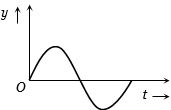
- 5The displacement time graph of a particle executing $S.H.M.$ is as shown in the figureThe corresponding force-time graph of the particle isView Solution
- 6Amplitude of a wave is represented by $A = \frac{c}{{a + b - c}}$ Then resonance will occur whenView Solution
- 7A particle moves with simple harmonic motion in a straight line. In first $\tau \,s$, after starting from rest, it travels a distance $a$, and in next $\tau \,s$, it travels $2a$ in same direction thenView Solution
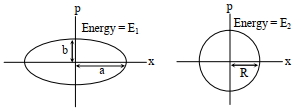
- 8Two independent harmonic oscillators of equal mass are oscillating about the origin with angular frequencies $\omega_1$ and $\omega_2$ and have total energies $E_1$ and $E_2$, respectively. The variations of their momenta $p$ with positions $x$ are shown in the figures. If $\frac{a}{b}= n ^2$ and $\frac{ a }{ R }= n$, then the correct equation$(s)$ is(are) $Image$View Solution
$(A)$ $E_1 \omega_1=E_2 \omega_2$ $(B)$ $\frac{\omega_2}{\omega_1}=n^2$ $(C)$ $\omega_1 \omega_2= n ^2$ $(D)$ $\frac{E_1}{\omega_1}=\frac{E_2}{\omega_2}$
- 9The displacement of a damped harmonic oscillator is given by $x\left( t \right) = {e^{ - 0.1\,t}}\,\cos \left( {10\pi t + \varphi } \right)$ The time taken for its amplitude of vibration to drop to half of its initial value is close to .... $s$View Solution
- 10The resultant of two rectangular simple harmonic motions of the same frequency and unequal amplitudes but differing in phase by $\frac{\pi }{2}$ isView Solution