Two pendulums of length $121\,cm$ and $100\,cm$ start vibrating in phase. At some instant, the two are at their mean position in the same phase. The minimum number of vibrations of the shorter pendulum after which the two are again in phase at the mean position is :
NEET 2022, Medium


Download our appand get started for free
Experience the future of education. Simply download our apps or reach out to us for more information. Let's shape the future of learning together!No signup needed.*
Similar Questions
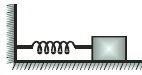
- 1Spring of spring constant $1200\, Nm^{-1}$ is mounted on a smooth frictionless surface and attached to a block of mass $3\, kg$. Block is pulled $2\, cm$ to the right and released. The angular frequency of oscillation is .... $ rad/sec$View Solution
- 2Two particles oscillating in $SHM$ along two very close parallel path such that they have same mean position. The equation of $SHM$ of two particles are $x_1 = A\, sin\,\omega t$ and $x_2 = A\,sin(\omega t + \phi )$ respectively. If maximum distance between them is $\frac{6A}{5}$ then $\phi $ equal to ..... $^o$View Solution
- 3A rectangular block of mass $5\,kg$ attached to a horizontal spiral spring executes simple harmonic motion of amplitude $1\,m$ and time period $3.14\,s$. The maximum force exerted by spring on block is $.......N$.View Solution
- 4In forced oscillation of a particle the amplitude is maximum for a frequency $\omega_{1}$ of the force, while the energy is maximum for a frequency $\omega_{2}$ of the force, thenView Solution
- 5A particle executes simple harmonic motion with an amplitude of $4 \,cm$. At the mean position the velocity of the particle is $10\, cm/s$. The distance of the particle from the mean position when its speed becomes $5 \,cm/s$ isView Solution
- 6A $ U$ tube of uniform bore of cross-sectional area $A$ has been set up vertically with open ends facing up. Now $m$ gm of a liquid of density $d$ is poured into it. The column of liquid in this tube will oscillate with a period $T$ such thatView Solution
- 7Two particles are executing S.H.M. The equation of their motion are ${y_1} = 10\sin \left( {\omega \,t + \frac{{\pi T}}{4}} \right),$ ${y_2} = 25\sin \,\left( {\omega \,t + \frac{{\sqrt 3 \pi T}}{4}} \right)$. What is the ratio of their amplitudeView Solution
- 8The angular velocity and the amplitude of a simple pendulum is $'\omega '$ and $'A'$ respectively. At a displacement $x$ from the mean position its kinetic energy is $'T'$ and potnetial energy is $'V'$. Then the ratio $\frac{V}{T}$ isView Solution
- 9When an oscillator completes $100$ oscillations its amplitude reduced to $\frac{1}{3}$ of initial value. What will be its amplitude, when it completes $200$ oscillations?View Solution
- 10Two simple harmonic motions are represented by the equationsView Solution
${x}_{1}=5 \sin \left(2 \pi {t}+\frac{\pi}{4}\right)$ and ${x}_{2}=5 \sqrt{2}(\sin 2 \pi {t}+\cos 2 \pi {t})$
The amplitude of second motion is ....... times the amplitude in first motion.