MCQ
Two sound waves of slightly different frequencies have amplitude ratio $\frac{11}{9} .$ What is the difference of sound levels in decibels of maximum and minimum intensities heard at a point :- ............. $\mathrm{dB}$
  • A
    $100$
  • B
    $10$
  • C
    $16$
  • $20$

Answer

Correct option: D.
$20$
d
$\mathrm{SL}_{2}-\mathrm{SL}_{1}=10 \mathrm{\,log}$

$\frac{\mathrm{I}_{\max }}{\mathrm{I}_{\min }}=10 \log \frac{(\sqrt{\mathrm{I}_{1}}+\sqrt{\mathrm{I}_{2}})^{2}}{(\sqrt{\mathrm{I}_{1}}-\sqrt{\mathrm{I}_{2}})^{2}}=10 \log \frac{\left(\frac{\mathrm{a}_{1}}{\mathrm{a}_{2}}+1\right)^{2}}{\left(\frac{\mathrm{a}_{1}}{\mathrm{a}_{1}}-1\right)^{2}}$

$=20 \mathrm{\,dB}$

Need a full question paper?

Generate a complete, print-ready paper with questions like this in minutes — across 16+ boards, with answer keys.

Start Generating Free

Similar questions

Which of the following equation does not represent a simple harmonic motion
A metal bal of mass $0.1\, kg$ is heated upto $500\,{}^oC$ and dropped into a vessel of heat capacity $800\, JK^{-1}$ and containing $0.5\, kg$ water. The initial temperature of water and vessel is $30\,{}^oC$. ........ $\%$ is the approximate percentage increment in the temperature of the water. [Specific heat Capacities of water and metal are, respectively $4200\, Jkg^{-1}K^{-1}$ and $400\, Jkg^{-1}K^{-1}$]
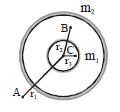
Two concentric shells of different masses $m_1$ and $m_2$ are having a sliding particle of mass $m$. The forces on the particle at position $A, B$ and $C$ are
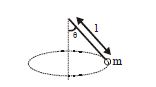
A conical pendulum is moving in a circle with angular velocity $\omega $ as shown. If tension in the string is $T$ , which of following equation are correct?
$Assertion$ : Angle of repose is equal to the angle of limiting friction.
$Reason$ : When the body is just at the point of motion, the force of friction in this stage is called limiting friction.
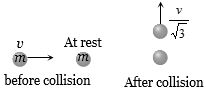
A mass $'m'$ moves with a velocity $'v'$ and collides inelastically with another identical mass. After collision the $1^{st}$ mass moves with velocity $\frac{v}{{\sqrt 3 }}$ in a direction perpendicular to the initial direction of motion. Find the speed of the $ 2^{nd}$ mass after collision
A mercury drop does not spread on a glass plate because the angle of contact between glass and mercury is
$A$ block of mass $m$ moving with a velocity $v_0$ on a smooth horizontal surface strikes and compresses a spring of stiffness $k$ till mass comes to rest as shown in the figure. This phenomenon is observed by two observers:

$A$: standing on the horizontal surface

$B$: standing on the block 

To an observer $A,$ the net work done on the block is

How does the displacement v/s time graph of a uniformly accelerated motion look like?
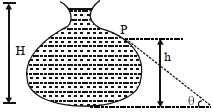
Figure here shows the vertical cross section of a vessel filled with a liquid of density $\rho$. The normal thrust per unit area on the walls of the vessel at the point $P$, as shown, will be