Question
Two statements are given- one labelled Assertion (A) and the other labelled Reason (R). Select the correct answer to these questions from the codes (a), (b), (c) and (d) as given below:
  1. Both Assertion (A) and Reason (R) are correct statements, and Reason (R) is the correct explanation of the Assertion (A).
  2. Both Assertion (A) and Reason (R) are correct statements, but Reason (R) is not the correct explanation of the Assertion (A).
  3. Assertion (A) is correct, but Reason (R) is incorrect statement.
  4. Assertion (A) is incorrect, but Reason (R) is correct statement.
Assertion (A): Sucrose is a non-reducing sugar.
Reason (R): Reducing groups of glucose and fructose are involved in glycosidic bond formation.
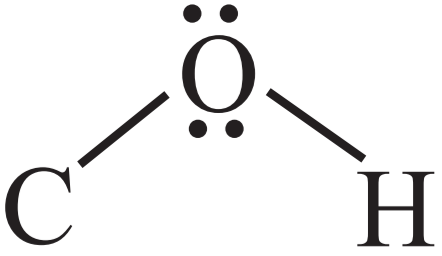
Answer

  1. Both Assertion (A) and Reason (R) are correct statements, and Reason (R) is the correct explanation of the Assertion (A).

Need a full question paper?

Generate a complete, print-ready paper with questions like this in minutes — across 16+ boards, with answer keys.

Start Generating Free

Similar questions

In these questions, a statement of assertion followed by a statement of reason is given. Choose the correct answer out of the following choices.
Assertion: At the end of electrolysis using platinum electrodes, an aqueous solution of copper sulphate tums colourless.
Reason: Copper in $\ce{CuSO_4}$ is converted to $\ce{Cu(OH)_2}$ during the electrolysis.
In these questions, a statement of assertion followed by a statement of reason is given. Choose the correct answer out of the following choices. Assertion: Carbylamine reaction involves the reaction between $1^\circ$ amine and chloroform in basic medium.
Reason: In carbylamine reaction $,-\ce{NH_2}$ group is converted into $- \ce{NC}$ group.
In these questions, a statement of assertion followed by a statement of reason is given. Choose the correct answer out of the following choices.
  1. Assertion and reason both are correct statements and reason is correct explanation for assertion.
  2. Assertion and reason both are correct statements but reason is not correct explanation for assertion.
  3. Assertion is correct statement but reason is wrong statement.
  4. Assertion is wrong statement but reason is correct statement.
Assertion: Electron withdrawing groups in aryl halides decrease the reactivity towards nucleophilic substitution.
Reason: 2, 4 - Dinitrochlorobenzene is more reactive than chlorobenzene.
Note: In the following questions a statement of assertion followed by a statement of reason is given. Choose the correct answer out of the following choices.
Assertion: Phosphorus chlorides $($tri and penta$)$ are preferred over thionyl chloride for the preparation of alkyl chlorides from alcohols.
Reason: Phosphorus chlorides give pure alkyl halides.
Assertion $(A): (CH_3)_3 C-O-CH_3$ gives $(CH_3)_3 C-I$ and $CH_3OH$ on treatment with $HI.$
Reason $(R):$ The reaction occurs by $S_N1$ mechanism.
In these questions, a statement of assertion followed by a statement of reason is given. Choose the correct answer out of the following choices.
Assertion: Vinylic halides are highly reactive towards nucleophilic substitution reactions.
Reason: Reactivity is due to the polarity of carbon$-$halogen bond.
In these questions, a statement of assertion followed by a statement of reason is given. Choose the correct answer out of the following choices.
  1. Assertion and reason both are correct statements and reason is correct explanation for assertion.
  2. Assertion and reason both are correct statements but reason is not correct explanation for assertion.
  3. Assertion is correct statement but reason is wrong statement.
  4. Assertion is wrong statement but reason is correct statement.
Assertion: Water boils at 373K as the vapour pressure at this temperature becomes equal to atmospheric pressure.
Reason: Vapour pressure of water is less than 1.013 bar at 373K.
In these questions, a statement of assertion followed by a statement of reason is given. Choose the correct answer out of the following choices.
  1. Assertion and reason both are correct statements and reason is correct explanation for assertion.
  2. Assertion and reason both are correct statements but reason is not correct explanation for assertion.
  3. Assertion is correct statement but reason is wrong statement.
  4. Assertion is wrong statement but reason is correct statement.
Assertion: The conductivity depends on the charge and size of the ions in which they dissociate, the concentration of ions or ease with which the ions move under potential gradient.
Reason: The conductivity of solutions of different electrolytes in the same solvent and at a given temperature is same.

In these questions, a statement of assertion followed by a statement of reason is given. Choose the correct answer out of the following choices.
  1. Assertion and reason both are correct statements and reason is correct explanation for assertion.
  2. Assertion and reason both are correct statements but reason is not correct explanation for assertion.
  3. Assertion is correct statement but reason is wrong statement.
  4. Assertion is wrong statement but reason is correct statement.
Assertion:  Bond angle is less than the normal tetrahedral bond angle.
Reason: Lone pair-lone pair repulsion decreases bond angle.
In these questions, a statement of assertion followed by a statement of reason is given. Choose the correct answer out of the following choices.
  1. Assertion and reason both are correct statements and reason is correct explanation for assertion.
  2. Assertion and reason both are correct statements but reason is not correct explanation for assertion.
  3. Assertion is correct statement but reason is wrong statement.
  4. Assertion is wrong statement but reason is correct statement.
Assertion: Zinc displaces copper from copper sulphate solution.
Reason: Eº of zinc is -0.76V and that of copper is +0.34V.