Question
Types of force and their effects

Answer

https://pg-data.sgp1.digitaloceanspaces.com/chapter_wise/15897/Q1.png" alt="Image">

Need a full question paper?

Generate a complete, print-ready paper with questions like this in minutes — across 16+ boards, with answer keys.
Start Generating Free

Similar questions

Thallophyta plants grow mainly in …………….. . This group of plants, which do not have specific parts like root-stem-leaves-flowers but are autotrophic due to the presence of …………….., is called algae. Algae show great diversity. They may be unicellular or …………….., and microscopic or large. Examples of algae are Spirogyra, Ulothrix, Ulva, Sargassum, etc. Some of these are found in fresh water while some are found in saline water. These plants usually have a …………….. and fibre-like body. Various types of …………….. like yeasts and moulds which do not have …………….. are also included in this group.
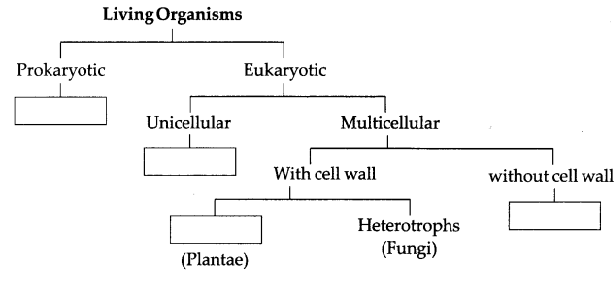
Living Organisms

Image
If resistors are connected in series,
Newton’s laws and conservation of momentum.
Transformation of energy
https://api.studentbro.in/NCERTSOLUTION//wp-content/uploads/2021/01/Maharashtra-Board-Class-9-Scienc..." alt="Maharashtra Board Class 9 Science Solutions Chapter 2 Work and Energy 17" width="600" height="" srcset=" 604w,  300w" sizes="(max-width: 604px) 100vw, 604px" />
Column ‘A’Column ‘B’
(1) Barium chloride(a) 24H2O
(2) Sodium sulphate(b) 7H2O
(3) Magnesium sulphate(c) 2H2O
(4) Alum(d) 10H2O
Write down the cations and anions obtained from the compounds in the following chart.
…………….. group of plants is called the amphibians’ of the plant kingdom because they grow in moist soil but need …………….. for reproduction. These plants are thalloid, multicellular and autotrophic. They reproduce by …………….. formation. The structure of the plant body of bryophytes is flat, ribbon?like long, without true …………….., stem and leaves. Instead, they have stem-like or leaf?like parts and root-like ……………. . They do not have specific …………….. for conduction of food and water. Examples are Moss (Funaria), Marchantia, Anthoceros, Riccia, etc.
Column ‘A’Column ‘B’
(1) Strontium – 90(a) Brain tumour
(2) Cobalt – 60(b) Hyperthyroidism
(3) Iodine – 131(c) Polycythemia
(4) Phosphorus – 32(d) Bone cancer
Transformation of energy

https://pg-data.sgp1.digitaloceanspaces.com/chapter_wise/15898/Q6.png" alt="Image" width="450" height="" />