MCQ
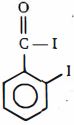
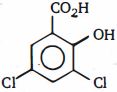
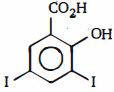
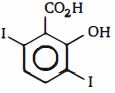
unknown $(A)$ is
  • A

  • B


  • D

Answer

Correct option: C.

c
$(c)$ $I^{\delta \ominus } - Cl^{\delta \ominus }$ used for iodination reaction take  place with respect to $+M$ of $-OH.$

Need a full question paper?

Generate a complete, print-ready paper with questions like this in minutes — across 16+ boards, with answer keys.

Start Generating Free

Similar questions

Wavelength of red light is absorbed by the complex
For a given reaction, $\Delta H = 35.5\ kJ\ mol^{-1}$ and $\Delta S = 83.6\ J\ K^{-1} \  mol^{-1}.$ The reaction is spontaneous at (Assume that $\Delta H$ and $\Delta S$ do not vary with temperature.)
The mass of one hydrogen atom is of the order of
The solution from the following with highest depression in freezing point/lowest freezing point is
Aluminium $(III)$ chloride forms a dimer because
Which of the following reaction does not give primary amine as a product ?
For the following two acid-base reactions, which statement is True ?

$(I){\mkern 1mu} C{H_3}CH_2^ - {\mkern 1mu}  + {\mkern 1mu} \mathop {C{H_3}N{H_2}}\limits_{p{K_a} = 35}  \rightleftharpoons \mathop {C{H_3}C{H_3}}\limits_{p{K_a} = 50}  + C{H_3}N{H^ - }$

$(II){\mkern 1mu} {F^ - }{\mkern 1mu}  + {\mkern 1mu} \mathop {{H_2}O}\limits_{p{K_a} = 15.7}  \rightleftharpoons \mathop {HF}\limits_{p{K_a} = 3.2}  + H{O^ - }$
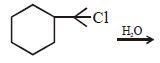
Which among the following complex have maximum number of isomers
What will be the product in the following reaction
For the reaction between $A$ and $B$ , the initial rate of reaction $(r_0)$ was measured for different initial concentration of $A$ and $B$ as given below Order of the reaction with respect to $A$ and $B$ respectively, is $\sqrt 2  = 1.4 ,\,\sqrt 3  \times 10^{-4}$ 
$A/mol\,L^{-1}$ $0.2$ $0.2$ $0.4$
$B/mol\,L^{-1}$ $0.3$ $0.1$ $0.05$
$r_0/mol^{-1}s^{-1}$ $5.0\times 10^{-5}$ $5.0\times 10^{-5}$ $1.4\times 10^{-4}$