Question
  1. Using Bohr's second postulate of quantization of orbital angular momentum show that the circumference of the electron in the nth orbital state in hydrogen atom is n times the de Broglie wavelength associated with it.
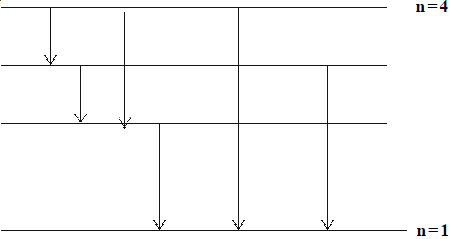
  2. The electron in hydrogen atom is initially in the third excited state.What is the maximum number of spectral lines which can be emitted when it finally moves to the ground state?
Need a full question paper?

Generate a complete, print-ready paper with questions like this in minutes — across 16+ boards, with answer keys.

Start Generating Free

Similar questions

A charge of 1.0C is placed at the top of your college building and another equal charge at the top of your house. Take the separation between the two charges to be 2.0km. Find the force exerted by the charges on each other. How many times of your weight is this force?
(a) Calculate the potential at a point P due to a charge of $4 \times 10^{-7} C$ located 9 cm away.
(b) Hence obtain the work done in bringing a charge of $2 \times 10^{-9} C$ from infinity to the point $P$. Does the answer depend on the path along which the charges is brought?
Write Biot-Savart law. Write the path of the motion of an electron when it enters magnetic field (a) perpendicularly (b) at $\theta$ angle.
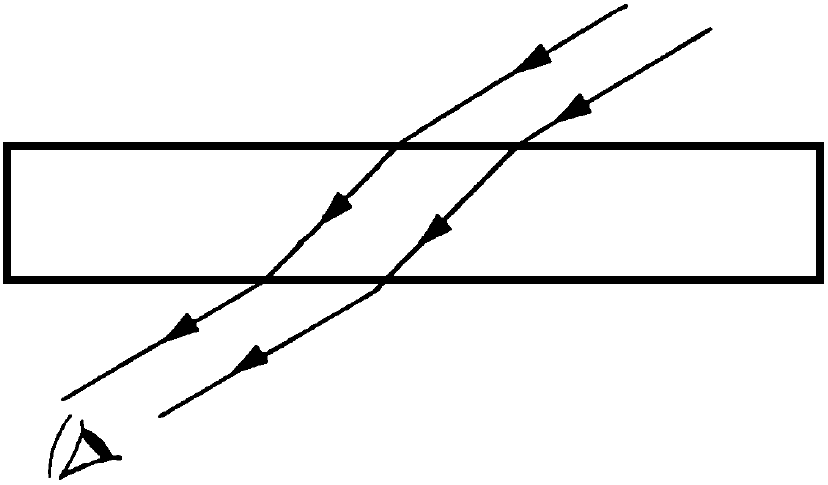
A narrow beam of light passes through a slab obliquely and is then received by an eye. The index of refraction of the material in the slab fluctuates slowly with time. How will it appear to the eye? The twinkling of stars has a similar explanation.

Obtain the equation of electric current for an AC circuit having only inductor.
Derive the formula of electric field for a point on the axis of electric dipole.
Calculate the number of photons emitted per second by a 10W sodium vapour lamp. Assume that 60% of the consumed energy is converted into light. Wavelength of sodium light = 590nm.
A point charge is moving along a straight line with a constant velocity u. Consider a small area A perpendicular to the direction of motion of the charge (El). Calculate the displacement current through the area when its distance from the charge is x. The value of x is not large so that the electric field at any instant is essentially given by Coulomb's law.

An electron and a photon each have a wavelength 1.00 nm. Find.
  1. Their momenta,
  2. The energy of the photon and,
  3. The kinetic energy of electron.
(a) Calculate the potential at a point P due to a charge of $4 \times 10^{-7} C$ located 9 cm away.
(b) Hence obtain the work done in bringing a charge of $2 \times 10^{-9} C$ from infinity to the point $P$. Does the answer depend on the path along which the charge is brought?
