Question
Using divisibility tests, determine which of the following numbers are divisible by $2;$ by $3;$ by $4;$ by $5;$ by $6;$ by $8;$ by $9;$ by $10;$ by $11 ($say, yes or no$):$
Number Divisible by
$2$ $3$ $4$ $5$ $6$ $8$ $9$ $10$ $11$
$128$                  
$990$                  
$1586$                  
$275$                  
$6686$                  
$639210$                  
$429714$                  
$2856$                  
$3060$                  
$406839$                  

Answer

 
Here, we have to divide the given set of numbers by the other set of given numbers to see whether each one of them is divisible or not.
To check this, we follow the divisibility rules as given below:
$i.\ $For divisible by $2$: Any number that has $0$,$2$,$4$,$6$, or $8$ in its one's place is divisible by $2$.
$ii.\ $For divisible by $3$: If the sum of all the digits of the number is multiple of $3$, then it is divisible by $3$.
$iii.\ $For divisible by $4$: Any number whose last two digits $($i.e. one's and ten's place digits$)$ are divisible by $4$ then, the number is divisible by $4$.
$iv.\ $For divisible by $5$: Any number that has $0$ or $5$ in its one's place is divisible by $5$.
$v.\ $For divisible by $6$: If a number a divisible by both $2$ and $3$, then it is divisible by $6$.
$vi.\ $For divisible by $8$: Any number whose last three digits are divisible by $8$ then, the number is divisible by $8$.
$vii.\ $For divisible by $9$: If the sum of all the digits of the number is multiple of $9$, then it is divisible by $9$.
$viii.\ $For divisible by $10$: Any number that has $0$ in its one's place is divisible by $10$.
So, after following these rules, we can see the results as are given below:
Number Divisible by
$2$ $3$ $4$ $5$ $6$ $8$ $9$ $10$ $11$
$990$ Yes Yes No Yes Yes No Yes Yes Yes
$1586$ Yes No No No No No No No No
$275$ No No No Yes No No No No Yes
$6689$ Yes No No No No No No No No
$639210$ Yes Yes No Yes Yes No No Yes Yes
$429714$ Yes Yes No No Yes No Yes No No
$2856$ Yes Yes Yes No Yes Yes No No No
$3060$ Yes Yes Yes Yes Yes No Yes Yes No
$406839$ No Yes No No No No No No No


Need a full question paper?

Generate a complete, print-ready paper with questions like this in minutes — across 16+ boards, with answer keys.

Start Generating Free

Similar questions

Draw an angle of measure $45^\circ $ and bisect it.
Solve the following equation and verify the answer: $\frac{3}{4}(\text{x}-1)=\text{x}-3$
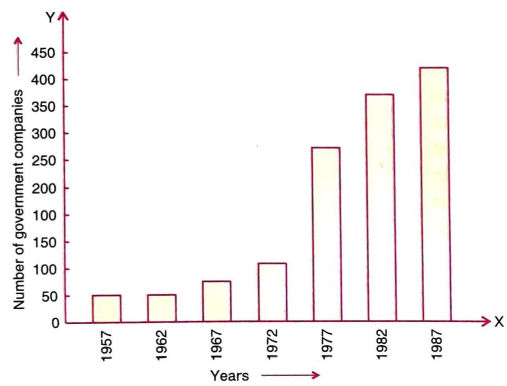
Read the following bar graph Fig. and answer the following questions:
Image
(i) What is the information given by the bar graph?
(ii) State each of the following whether true or false.
(a) The number of government companies in 1957 is that of 1982 is 1: 9.
(b) The number of government companies have decreased over the year 1957 to 1983.
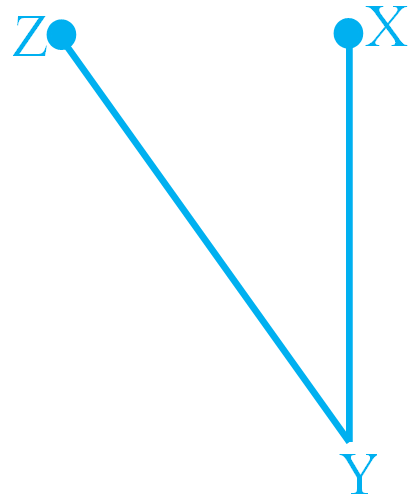
Bisect $\angle\text{XYZ}$ of Figure.
Draw a line segment of length $12.8\ cm,$ Using compasses, divide it into four equal parts. Verify by actual measurement.
In a village six fruit merchants sold the number of fruit baskets in a particular season:
Number of fruit merchants Number of fruit baskets $- 100$ Fruit baskets

Rahim
Lakhanpal
Anwar
Martin
Ranjit Singh
Joseph
Observe this pictograph and answer the question: How many fruit baskets were sold by Anwar?
Arrange the following numbers in descending order:
$190909, 1808088, 16060666, 16007777, 181888, 1808090$
Copy Figure on your notebook and draw a perpendicular to l through $P,$ using $(i)$ set squares $(ii)$ Protractor $(iii)$ ruler and compasses. How many such perpendiculars are you able to draw?
Arrange the following fractions in descending order:$\frac{3}{4},\frac{5}{8},\frac{11}{12}\ \text{and}\ \frac{17}{24}$
Catherine threw a dice $40$ times and noted the number appearing each time as shown below :
$1$ $3$ $5$ $6$ $6$ $3$ $5$ $4$ $1$ $6$
$2$ $5$ $3$ $4$ $6$ $1$ $5$ $5$ $6$ $1$
$1$ $2$ $2$ $3$ $5$ $2$ $4$ $5$ $5$ $6$
$5$ $1$ $6$ $2$ $3$ $5$ $2$ $4$ $1$ $5$
Make a table and enter the data using tally marks. Find the number that appeared the minimum number of times.