Question
Verify the following: $(7p - 13q)^2+ 364pq = (7p + 13q)^2$

Answer

$(7p - 13q)^2+ 364pq = (7p + 13q)^2$
Taking $LHS$
$ =(7 p-13 q)^2+364 p q $
$ =(7 p)^2+(13 q)^2-2 \times 7 p \times 3 q+364 p q $
$ =(7 p)^2+(13 q)^2-182 p q+364 p q $
$ =(7 p)^2+(13 q)^2+182 p q $
$ =(7 p)^2+(13 q)^2+2 \times 7 p \times 13 q $
$=(7 p+13 q)^2 $
$= RHS$
Hence verified

Need a full question paper?

Generate a complete, print-ready paper with questions like this in minutes — across 16+ boards, with answer keys.
Start Generating Free

Similar questions

If $ 5^{3 x-1} \div 25=125 $, find the value of $x.$
Show that the product of the areas of the floor and two adjacent walls of a cuboid is the square of its volume.
Write the prime factorization of the following numbers and hence find their square roots. $9604$
Verify the property: $x \times (y + z) = x \times y + x \times z$ by taking:
$\text{x}=\frac{-3}{4},\text{y}=\frac{-5}{2},\text{z}=\frac{7}{6}$
If $9\ kg$ of sugar costs $Rs.\ 238.50$, how much sugar can be bought for $Rs.\ 371$?
Solve: $\frac{2\text{x}-(7-5\text{x})}{9\text{x}-(3+4\text{x})}=\frac{7}{6}$
A garrison of  $200$ men had provisions for $45$ days. After $15$ days, $40$ more men join the garrison. Find the number of days for which the remaining food will last.
Inverse Variation
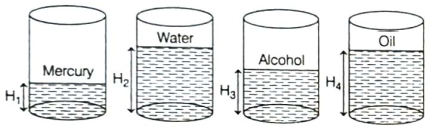
Take four cylindrical containers of the same size each of radius 5 cm . Fill the containers with different types of liquids with same mass (different density) like mercury, water, alcohol, oil.
Image
Note the height in each case at which the level of liquid stands. Tabulate this information in the following table and show that this is case of inverse proportion.
DensityMercutyWaterAlcoholOil
$\left( g / cm ^3\right)$$13.6\left(D_1\right)$$0.99\left(D_2\right)$$0.78\left(D_3\right)$$0.96\left(D_4\right)$
Height (cm)$H _1$$H _2$$H _3$$H _4$
Density $\times$ Height $=$ Constant .
Show that 500 is not a perfect square.
Find the areas of rectangles with the following pairs of monomials as their lengths and breadths respectively.
$(p, q),(10 m, 5 n),\left(20 x^2, 5 y^2\right),\left(4 x, 3 x^2\right),(3 m n, 4 n p)$