Question
Vertebrates have a true vertebral column and internal skeleton, allowing a completely different distribution of muscle attachment points to be used for movement. Vertebrates are bilaterally symmetrical, triploblastic, coelomic and segmented, with complex differentiation of body tissues and organs. All chordates possess the following features, Such as they have a notochord, a dorsal nerve cord, paired gill pouches.Vertebrates are grouped into six classes.
CYCLOSTOMATA
Cyclostomes are jawless vertebrates. They have an elongated eel-like body, circular mouth, slimy skin and are scale less. They are ectoparasites or borers of other vertebrates. Example, Petromyzon (Lamprey) and Myxine
PISCES
These are fish. They are exclusively aquatic animals. Their skin is covered with scales. They obtain oxygen dissolved in water by using gills. The body is streamlined, muscular tail is used for movement. They are cold-blooded and their hearts have only two chambers, they lay eggs. Examples, tuna or rohu.
AMPHIBIA
These animals differ from the fish in the lack of scales, in having mucus glands in the skin, and a three-chambered heart. Respiration is through either gills or lungs. They lay eggs. These animals are found both in water and on land. Examples, Frogs & toads.
REPTILIA
These animals are cold-blooded, have scales and breathe through lungs. They have a three-chambered heart, crocodiles have four heart chambers. They lay eggs with tough coverings and do not need to lay their eggs in water, unlike amphibians.Examples, Snakes, turtles, lizards.
AVES
These are warm-blooded animals and have a four-chambered heart. They lay eggs. There is an outside covering of feathers, and two forelimbs are modified for flight. They breathe through lungs.
MAMMALIA
Mammals are warm-blooded animals with four-chambered hearts. They have mammary glands for the production of milk to nourish their young. Their skin has hairs as well as sweat and oil glands. However, Examples, Kangaroo.
(1) Which of the following is not a characteristic feature of Mammals?
$(a)$ Warm blooded animal
$(b)$ Four chambered heart
$(c)$ Have mammary gland
$(d)$ Skin in covered with scales
(2) Which of the following is a characteristic feature of Reptiles?
$(a)$ Cold blooded animal
$(b)$ Generally have three chambered heart
$(c)$ Have mammary gland
$(d)$ Both $a$ & $b$
(3) Which class of vertebrates are known as jawless vertebrates?
$(a)$ Amphibian
$(b)$ Aves
$(c)$ Mammalia
$(d)$ Cyclostomata
(4) Enlist the six classes of Vertebrates?
(5) Give any three characteristic feature of Aves
Answer

$(1) D$
$(2) D$
$(3) D$
$(4)$ Vertebrates are grouped into six classes
  • Pisces
  • Cyclostomata
  • Amphibian
  • Aves
  • Mammalia
  • Cyclostomata
$(5)$Characteristic feature of Aves
  • These are warm-blooded animals.
  • They have a four-chambered heart.
  • They lay eggs.
  • There is an outside covering of feathers.
  • Two forelimbs are modified for flight.
  • They breathe through lungs.

Need a full question paper?

Generate a complete, print-ready paper with questions like this in minutes — across 16+ boards, with answer keys.

Start Generating Free

Similar questions

Read the following text carefully and answer the questions that follow:
The tissue is a group of cells having similar origin, structure\& function. Study of tissues is called Histology. In unicellular organism (Amoeba) single cell performs all basic functions, whereas in multi-cellular organisms (Plants and Animals) shows division of labour as Plant tissue \& Animal tissues. Plant tissues are two types:
Image
Meristematic tissue:
The meristems are the tissues having the power of cell division. It is found on that region of the plant which grows.
Following are the types of Meristems:
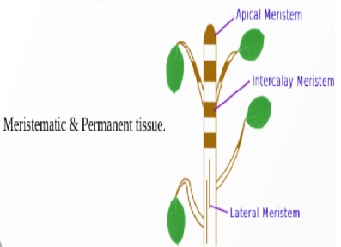
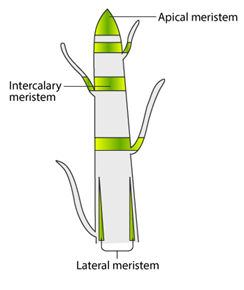
The Apical meristems- It is present at the growing tip of the stem and roots and increases the length.
The lateral meristems- It present at the lateral side of stem and root (cambium) and increases the girth.
The intercalary meristems- It present at internodes or base of the leaves and increases the length between the nodes.
i. Which tissue help in the secondary growth of the plant?
ii. In what region of the plant does intercalary meristematic growth occur?
iil. Where does meristematic tissue mostly found in a plant?
Carbon is found in various forms on the Earth. It occurs in the elemental form as diamonds and graphite. In the combined state, it is found as carbon dioxide in the atmosphere, as carbonate and hydrogen carbonate salts in various minerals, while all life-forms are based on carbon-containing molecules like proteins, carbohydrates, fatsnucleic acids and vitamins. The endoskeletons and exoskeletons of various animals are also formed from carbonate salts. Carbon is incorporated into life-forms through the basic process of photosynthesis which is performed in the presence of Sunlight by all life-forms that contain chlorophyll. This process converts carbon dioxide from the atmosphere or dissolved in water into glucose molecules. The utilisation of glucose to provide energy to living things involves the process of respiration in which oxygen may or may not be used to convert glucose back into carbon dioxide. This carbon dioxide then goes back into the atmosphere. Another process thatadds to the carbon dioxide in the atmosphere is the process of combustion where fuels are burnt to provide energy for various needs like heating, cooking, transportation and industrial processes. In fact, the percentage of carbon dioxide in the atmosphere is said to have doubled since the industrial revolution when human beings started burning fossil fuels on a very large scale. Carbon, like water, is thus cycled repeatedly through different forms by the various physical and biological activities.
$(1)$ Which process converts carbon dioxide from the atmosphere or dissolved in water into glucose molecules
$(a)$ Photolysis
$(b)$ Photosynthesis
$(c)$ Respiration
$(d)$ Nitrogen cycle
$(2)$Identify the correct statement
Statement $1 –$ Carbon is incorporated into life-forms through the basic process of Photosynthesis
Statement $2 –$ Photosynthesis is performed by all life-forms that contain Chlorophyll
Statement $3 -$Carbon occurs in the elemental form as diamonds and graphite.
Statement $4 $-Proteins and carbohydrates are carbon containing molecules.
$(a)$ Both $1 \& 4$
$(b)$ Both $2 \& 4$
$(c)$ Only $3$
$(d)$ All of the above
$(3)$ The endoskeletons and exoskeletons of various animals are made up of
$(a)$ Carbon Dioxide
$(b)$ Diamond
$(c)$ Graphite
$(d)$ Carbonate salts
$(4)$ What is the respiration?
$(5)$ Enlist the elemental form of carbon.
Tincture of iodine is a mixture of two materials $X$ and $Y$ . The material Y has a property that its solid form can be converted directly into vapours on heating by a process called $Z$.
$a.$ What could $X$ be?
$b.$ What could $Y$ be?
$c.$ Name the process $Z$.
$d.$ Which process would you use to recover both the components $X$ and $Y$ from tincture of iodine?
$e.$ Which process can be used to recover only component $Y$ from tincture of iodine?
Nitrogen gas makes up $78\%$ of our atmosphere and nitrogen is also a part of many molecules essential to life like proteins, nucleic acids $(DNA$ and $RNA)$ and some vitamins. Nitrogen is found in other biologically important compounds such as alkaloids and urea too. Nitrogen is thus an essential nutrient for all life-forms and life would be simple if all these life-forms could use the atmospheric nitrogen directly. Most commonly, the nitrogen-fixing bacteria are found in the roots of legumes (generally the plants which give us pulses) in special structures called root nodules. Other than these bacteria, the only other manner in which the nitrogen molecule is converted to nitrates and nitrites is by a physical process. During lightning, the high temperatures and pressures created in the air convert nitrogen into oxides of nitrogen. These oxides dissolve in water to give nitric and nitrous acids and fall on land along with rain. These are then utilised by various life forms.Plants generally take up nitrates and nitrites and convert them into amino acids which are used to make proteins. These proteins and other complex compounds are subsequently consumed by animals. Once the animal or the plant dies, other bacteria in the soil convert the various compounds of nitrogen back into nitrates and nitrites. Thus, there is a nitrogen-cycle in nature in which nitrogen passes from its elemental form in the atmosphere into simple molecules in the soil and water, which get converted to more complex molecules in living beings and back again to the simple nitrogen molecule in the atmosphere.
(1) How much Nitrogen is present in our atmosphere?
$(a) 76 \%$
$(b) 77 \%$
$(c) 78 \%$
$(d) 79 \%$
(2) Identify the correct statement
Statement $1 –$ Nitrogen is an essential nutrient for all life-forms and life.
Statement $2 –$ all life-forms use the atmospheric nitrogen directly.
Statement $3 –$ Nitrogen is a part of $DNA$ & $RNA$
Statement $4 –$ Our atmosphere have $79 \%$ nitrogen.
$(a)$ Both $1$ & $2$
$(b)$ Both $1$ & $3$
$(c) $ Both $3$ & $4$
$(d)$ All of the above
(3) Plants use nitrates and nitrites and convert them into
$(a)$ Vitamins
$(b)$ Enzymes
$(c)$ Amino acids
$(d)$ Nitrogen
(4) What is the main function of root nodules in legume plants?
(5) Explain the physical process by which nitrogen molecule is converted to nitrates and nitrites?
The second law of motion is quantitative expression of force and it states that the rate of change of momentum of an object isproportional to the applied unbalanced force in the direction of force. Mathematically, $F$ = ma, the unit of force is $kg-m/s^2$ or Newton,which has the symbol $N$. The second law ofmotion gives us a method to measure the force acting on an object as a product of its mass and acceleration.Answer the following questions.
(i) SI unit of force is
$(a)$ Newton
$(b)$ $Kg-m/s^2$
$(c)$ Both $a$ and $b$
$(d)$ None of the above
(ii) The quantitative expression of force is given by
$(a)$ First law of motion
$(b)$ Second law of motion
$(c)$ Third law of motion
$(d)$ None of the above
(iii) Force is directly proportional to
$(a)$ Acceleration of object
$(b)$ Time for which force acts on object
$(c)$ Both a and b
$(d)$ None of the above
(iv) State second law of motion. State whether it is scalar or vector quantity
(v) Differentiate between first law and second law of motion.(give 3 points)
As you know, the density of a substance is defined as mass of a unit volume. The unit ofdensity is kilogram per meter cube $\left( kg / m ^{-3}\right)$. The density of a given substance, under specified conditions, remains the same. Therefore the density of a substance is one of its characteristic properties. It is different for different substances. For example, the density of gold is $19300\left(kg / m ^{-3}\right)$ while that of water is $1000\left(kg / m ^{-3}\right)$. The density of a given sample of a substance can help us to determine its purity. It is often convenient to express density of a substance in comparison with that of water. The relative density of a substance is the ratio of its density to that of water:Density of a substance
Relative density =
Density of water
Since the relative density is a ratio of similar quantities, it has no unit. Answer the following.
(i) SI unit of density is
$(a)$ $kg/m$
$(b)$ $kg /m^2$
$(c)$ $kg /m^3$
$(d)$ None of these
(ii) SI unit of relative density is
$(a)$ $
$(b)$ No unit
$(c)$ $kg /s^3$
$(d)$ None of these
(iii) Relative density of water is
$(a)$ $1000$
$(b)$ $1$
$(c)$ $10$
$(d)$ None of these
(iv)Define relative density.
(v) Comment of relative density value of substance which
(1) Sink in water
(2) float on water
Work done by force acting on an object is equal to the magnitude of the force multiplied by the distance moved in the direction of the force. Work has only magnitude and no direction. Work done is negative when the force acts opposite to the direction of displacement. Work done is positive when the force is in the direction of displacement.The unit of work is newton-metre ($N$ m)or joule $(J)$.
(i) Work done is
$(a)$ Scalar quantity
$(b)$ Vector quantity
$(c)$ Tensor quantity
$(d)$ None of these
(ii) When force acts against the direction of displacement then work done will be
$(a)$ positive
$(b)$ negative
$(c)$ both a and b can possible
$(d)$ None of these
(iii) SI unit of work is
$(a)$ Joule$(J)$
$(b)$ Newton meter$(N-m)$
$(c)$ both $a$ and $b$
$(d)$ None of these
(iv)You are lifting stone from floor. Work is done by theforce exerted by you on the stone. Theobject moves upwards. The force youexerted is in the direction ofdisplacement. However, there is theforce of gravity acting on the object. Which one of these forces is doingpositive work?
Which one is doing negative work?
(v) Define 1J of work.


The growth of plants occurs only in certain specific regions. This is because the dividing tissue, also known as meristematic tissue, is located only at these points. Depending on the region where they are present, meristematic tissues are classified as apical, lateral and intercalary. New cells produced by meristem are initially like those of meristem itself, but as they grow and mature, their characteristics slowly change and they become differentiated as components of other tissues
Apical meristem is present at the growing tips of stems and roots and increases the length of the stem and the root. The girth of the stem or root increases due to lateral meristem (cambium). Intercalary meristem seen in some plants is located near the node
Cells of meristematic tissue are very active, they have dense cytoplasm, thin cellulose walls and prominent nuclei. They lack vacuoles.
(1) Which meristem helps in increasing the girth of the plant?
$(a)$ Primary meristem
$(b)$ Apical meristem
$(c)$ Intercalary meristem
$(d)$ Lateral meristem
(2) Lateral meristem is responsible for_____________
$(a)$ Growth of apical portion
$(b)$ Increase in the length
$(c)$ Increasing the girth of stem and root
$(d)$ Growth in parenchyma
(3) The meristem present at the base of the internode is_____________
$(a)$ Lateral meristem
$(b)$ Intercalary Meristem
$(c)$ Apical Meristem
$(d)$ All of the above
(4) What are the characteristic of Meristematic tissue?
(5) Enlist the type of meristematic tissue.
A more powerful vehiclewould complete a journey in a shorter timethan a less powerful one. We talk of the powerof machines like motorbikes and motorcars.The speed with which these vehicles changeenergy or do work is a basis for theirclassification. Power measures the speed ofwork done, that is, how fast or slow work isdone. Power is defined as the rate of doingwork or the rate of transfer of energy. If anagent does a work $W$ in time $t$, then power isgiven by$P$= work/time
$P= W/T$. The unit of power is watt.
(i) The rate of doing work is defined as
$(a)$ Energy
$(b)$ Force
$(c)$ Power
$(d)$ None of these
(ii) Total energy consumed divided by total time taken is called as
$(a)$ Average power
$(b)$ Instantaneous power
$(c)$ Both $a$ and $b$
$(d)$ None of these
(iii) Let A and B having same weight start climbing the rope and reach height of 10m. Let A takes 10sec while B takes 12sec then work done
$(a)$ By both will be same
$(b)$ By $A$ is more than work done by $B$
$(c)$ By $B$ is more than work done by $A$
$(d)$ None of these
(iv) Define 1 Watt of power
(v) An electric bulb of 20W is used for 5h per day. Calculate the ‘units’ of energy consumed in one day by the bulb.
The form of energy can be changed from one form to another. What happens to the totalenergy of a system during or after the process?Whenever energy gets transformed, the totalenergy remains unchanged. This is the law ofconservation of energy. According to this law, energy can only be converted from one form to another it can neither be created nor destroyed. The total energy before and after the transformation remains the same.The lawof conservation of energy is valid inall situations and for all kinds of transformations. Thus during motion the sum of the potential energy and kinetic energy of the object would be the same at all points. That is, potential energy + kinetic energy = constant.Andcalled as mechanical energy.
(i) Which of the energy conversion occur in electric iron?
$(a)$ Electric energy converted into heat energy
$(b)$ Electric energy converted into light energy
$(c)$ Heat energy converted into electrical energy>
$(d)$ None of these
(ii) When ball drops from height which of the energy conversion takes place
$(a)$ Gravitational potential energy converted into kinetic energy
$(b)$ Kinetic energy converted into Gravitational potential energy
$(c)$ Heat energy converted into electrical energy
$(d)$ None of these
(iii) When ball is thrown vertically upward which of the following quantity remains constant?
$(a)$ Energy
$(b)$ Force
$(c)$ Potential energy
$(d)$ None of these
(iv) State law of conservation of energy.
(v) In hydroelectric power plant which energy conversion happens?