MCQ
Visible light passing through a circular hole forms a diffraction disc of radius 0.1mm on a screen. If an X-ray is passed through the same setup, the radius of the diffraction disc will be:
- Azero
- B< 0.1mm
- C0.1mm
- D> 0.1m
Explanation:
Radius of the diffraction disc is directly proportional to the wavelength of the light used for the given hole. We know that the wavelength of an X-ray is less than the wavelength of visible light. If an X-ray is passed through the same setup, the radius of the diffraction disc will be less than 0.1m.
Generate a complete, print-ready paper with questions like this in minutes — across 16+ boards, with answer keys.
If a power of 100 W is being supplied across a potential difference of 200 V, current flowing is
|
(a) 2 A |
(b) 0.5 A |
(c) 1 A |
(d) 20 A |
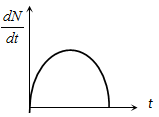
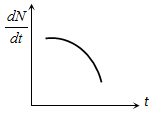
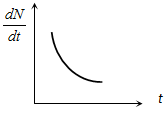
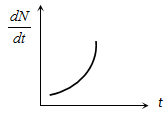
Radioactive element decays to form a stable nuclide, then the rate of decay of reactant  will vary with time (t) as shown in figure
|
(a)
|
(b)
|
(c)
|
(d)
|
A charge produces an electric field of 1 N/C at a point distant 0.1 m from it. The magnitude of charge is
|
(a) 1.11 |
(b) 9.11 |
(c) 7.11 |
(d) None of these |
The minimum intensity of light to be detected by human eye is  . The number of photons of wavelength 5.6
  entering the eye, with pupil area
  , per second for vision will be nearly
|
(a) 100 |
(b) 200 |
(c) 300 |
(d) 400 |
The path executed by a charged particle whose motion is perpendicular to magnetic field i
|
(a) A straight line |
(b) An ellipse |
(c) A circle |
(d) A helix |
A charge of Q coulomb is placed on a solid piece of metal of irregular shape. The charge will distribute itself
|
(a) Uniformly in the metal object |
|
(b) Uniformly on the surface of the object |
|
(c) Such that the potential energy of the system is minimised |
|
(d) Such that the total heat loss is minimised |