MCQ
We can reduce random errors by
  • Taking large number of observations
  • B
    Corrected zero error
  • C
    By following proper technique of experiment
  • D
    Both $(a)$ and $(c)$

Answer

Correct option: A.
Taking large number of observations
a
(a)

The only method of reducing random errors is by taking more and more number of observations.

Need a full question paper?

Generate a complete, print-ready paper with questions like this in minutes — across 16+ boards, with answer keys.
Start Generating Free

Similar questions

The upper end of a wire of radius $4\ mm$ and length $100\ cm$ is clamped and its other end is twisted through an angle of $30^\circ .$ The angle of shear is:
Which of the following quantities does not depend upon the orbital radius of the satellite
Which of the following statements is true/correct
A tuning fork vibrating with a sonometer having $20\,cm$ wire produces $5$ beats per sec. The beat frequency does not change if the length of the wire is changed to $21\,cm$. The frequency of the tuning fork must be ..... $Hz$
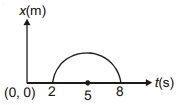
Position time graph of a particle moving along straight line is shown which is in the form of semicircle starting from $t=2$ to $t=8 \,s$. Select correct statement
During an adiabatic compression, $830\, J$ of work is done on $2\, moles$ of a diatomic ideal gas to reduce its volume by $50\%$. The change in its temperahture is nearly..... $K$ $(R\, = 8.3\, J\,K^{-1}\, mol^{-1} )$
A particle free to move along the $x-$axis has potential energy given by $U(x) = k[1 - \exp {( - x)^2}]$ for $ - \infty \le x \le + \infty $, where k is a positive constant of appropriate dimensions. Then
If the error in the measurement of radius of a sphere is $2\%$ then the error in the determination of volume of the sphere will be ........ $\%$
The musical interval between two tones of frequencies $320 Hz$ and $240 Hz$ is
A listener is at rest with respect to the source of sound. A wind starts blowing along the line joining the source and the observer. Which of the following quantities do not change?
  1. Frequency.
  2. Velocity of sound.
  3. Wavelength.
  4. Time period.