Question
What are alcohol, phenol and ether compounds ?

Answer

→ Alcohol compounds: An alcohol contains one or more hydroxyl (OH) group(s) directly attached to carbon atom(s), of an aliphatic system. For example, CH3OH.
→ Phenol compounds: A phenol contains one or more hydroxyl (OH) group(s) directly attached to carbon atom(s), of an aromatic system. For example, C6H5OH
→ Alcohol compounds: The substitution of a hydrogen atom in a hydrocarbon by an alkoxy or aryloxy group (R-O/Ar-O) yields another class of compounds known as 'ethers', for example, dimethyl ether (CH3OCH3).
→ In short, ether is a compound which is formed by substituting the hydrogen atom of hydroxyl group of an alcohol or phenol by an alkyl or aryl group.

Need a full question paper?

Generate a complete, print-ready paper with questions like this in minutes — across 16+ boards, with answer keys.
Start Generating Free

Similar questions

How do you explain the amphoteric behaviour of amino acids?
Write down the IUPAC name for the following complex and indicate the oxidation state, electronic configuration and coordination number. Also give stereochemistry and magnetic moment of the complex:
CrCl3(py)3
How much charge is required for the following reductions :
(i) 1 mol of Al3+ to Al?
(ii) 1 mol of Cu2+ to Cu?
(iii) 1 mol of MnO4- to Mn2+?
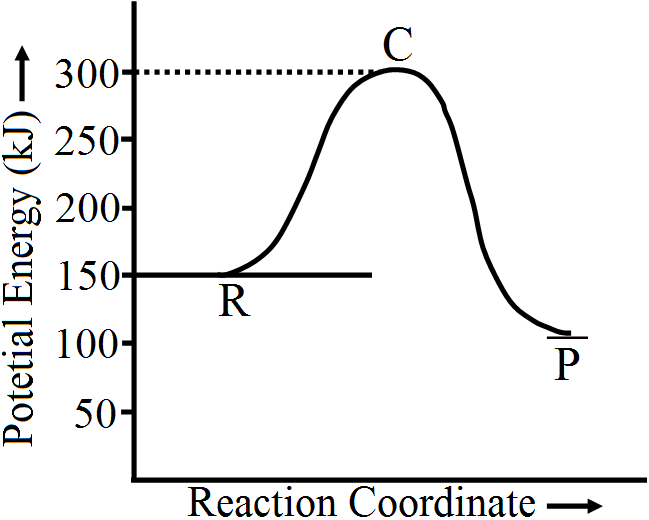
Answer the following questions on the basis of the given plot of potential energy vs reaction coordinate:

  1. What is the threshold energy for the reaction?
  2. What is the activation energy for forward reaction?
  3. What is the activation energy for backward reaction?
  4. What is enthalpy change for the forward reaction?

Answer the following questions.
Write about the following on protein synthesis:
  1. Name the location where protein synthesis occurs.
  2. How do 64 codons code for only 20 amino acids?
  3. Which of the two bases of the codon are more important for coding?
Write structural formulas and names of four possible aldol condensation products from propanal and butanal in each case indicate which aldehyde acts as nucleophile and which as electrophile.
How to prepare butan-1-ol by reduction of various derivatives of acids.
The monoamino monocarboxylic acids have two pKa values.
The rate constant for the first order decomposition of H2O2 is given by the following equation:

$\log{k}=14.2-\frac{\text{1.0}\times\text{10}^{4}}{\text{T}}K$

Calculate Ea for this reaction and rate constant k if its half-life period be 200 minutes.
(Given: R = 8.314 J K–1 mol–1)

A certain reaction is 50% complete in 20 minutes at 300K and the same reaction is again 50% complete in 5 minutes at 350K. Calculate the activation energy if it is a first order reaction.
[R = 8.314 J K–1 mol–1 ; log 4 = 0.602]