Question
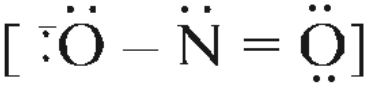
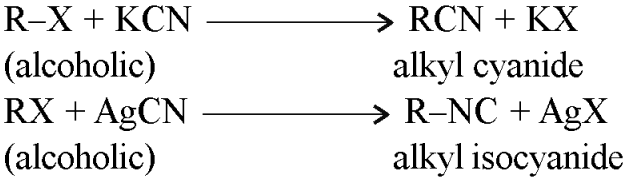
What are ambident nucleophilies? Explain with an example.

Need a full question paper?

Generate a complete, print-ready paper with questions like this in minutes — across 16+ boards, with answer keys.

Start Generating Free

Similar questions

Give reasons:
  1. $\ce{C–Cl}$ bond length in chlorobenzene is shorter than $\ce{C–Cl}$ bond length in $\ce{CH_3–Cl}$.
  2. The dipole moment of chlorobenzene is lower than that of cyclohexyl chloride.
  3. $\ce{S_N1}$ reactions are accompanied by racemization in optically active alkyl halides.
Answer the following questions.
What deficiency diseases are caused due to lack of vitamins $\text{A, B1, B6}$ and $\text{K}$ in human diet?
In the button cells widely used in watches and other devices the following reaction takes place:
$Zn(s) + Ag_2O(s) + H_2O(l) \rightarrow Zn^{2+}(aq) + 2Ag(s) + 2OH^– (aq)$
Determine $\triangle_\text{r}\text{G}^\ominus$ and $\text{E}^\ominus$ for the reaction.
Explain aldol condensation with suitable example. ### Write a short note: Aldol condensation.
  1. Urea forms an ideal solution in water. Determine the vapour pressure of anaqueous solution containing 10% by mass of urea at 40°C. (Vapour pressure of water at 40°C = 55.3 mm of Hg)
  2. Why is freezing point depression of 0.1 M sodium chloride solution nearly twice that of 0.1 M glucose solution?
How will you convert?
(i) Propene → Propan-1-ol
(ii) Benzyl chloride → Benzyl alcohol
(iii) Ethyl Magnesium Bromide → 2-methyl Propan-2-ol
The equilibrium constant of cell reaction :
$Sn^{4+}(.aq) + Al(s) Al^{3+ }\rightarrow + Sn^{2+} (aq)$  is  $4.617 \times 10^{184}, at 25 ^\circ C$
a. Calculate the standard emf of the cell. $($Given: $\log 4.617 \times 10^{184} = 184.6644)$
b. What will be the $E^\circ$ of the half cell $Al^{3+}/Al, if E^\circ$ of half cell $Sn^{4+}/Sn^{2+}$ is $4+ 0.15 V.$
A chloride of fourth group cation in qualitative analysis gives a green coloured complex $[A]$ in aqueous solution which when treated with ethane $-1, 2-$ diamine $($en$)$ gives pale $-$ yellow solution $[B]$ which on subsequent addition of ethane $-1, 2-$ diamine turns to blue/purple $[C]$ and finally to violet $[D]$. Write the structures of complexes $[A], [B], [C]$ and $[D].$
How do you prepare $p-$bromoaniline and $o-$bromoaniline from aniline? Explain.
Short note on: Sucrose.