Question
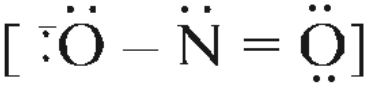
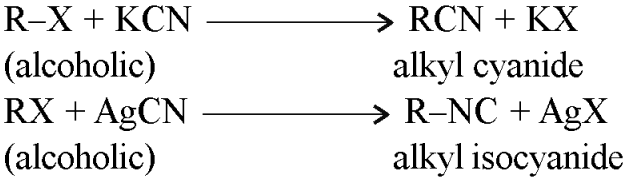
What are ambident nucleophilies? Explain with an example.

Need a full question paper?

Generate a complete, print-ready paper with questions like this in minutes — across 16+ boards, with answer keys.

Start Generating Free

Similar questions

Explain preparation of haloarene from amine compound. ### Preparation of hyloarene by sandmayer reaction.
Write the mechanism of acid dehydration of ethanol to yield ethane.
(a) Account for the following :
(i) Copper (I) compounds are white whereas Copper (II) compounds are coloured.
(ii) Chromates change their colour when kept in an acidic solution.
(iii) $Zn , Cd , Hg$ are considered as $d$-block elements but not as transition elements.
(b) Calculate the spin only moment of $Co ^{2+}( Z =27)$ by writing the electronic configuration of Co and $Co ^{2+}$.
When a steady current of 2A was passed through two electrolytic cells A and B containing electrolytes ZnSO4 and CuSO4 connected in series, 2g of Cu were deposited at the cathode of cell B. How long did the current flow? What mass of Zn was deposited at cathode of cell A?
[Atomic mass: Cu = 63.5 g mol-¹, Zn = 65 g mol-1; 1F = 96500 C mol-¹]
Explain unimolecular nucleophilic substitution (SN1) reaction with mechanism.
Explain with chemical reactions, the formation of anhydrides and esters from carboxylic acids.
  1. Define crystal field splitting energy. On the basis of crystal field theory, write the electronic configuration for d4 ion if $\triangle_0>\text{P}$.
  2. [Ni(CN)4]2– is diamagnetic whereas [NiCl4]2– is paramagnetic. Give reason. (At. no. of Ni = 28)
Depict the galvanic cell in which the reaction:
$ Z n(s)+2 A g^{+}(a q) \rightarrow Z n^{2+}(a q)+2 A g(s) $
takes place. Further show:
i. Which of the electrodes is negatively charged?
ii. The carries of current in the cell.
iii. Individual reaction at each electrode.
Match the items of Column I and Column II.
 
Column I
 
Column II
(i)
Diamond.
(a)
Short interval of time.
(ii)
Instantaneous rate.
(b)
Ordinarily rate of conversion is imperceptible.
(iii)
Average rate.
(c)
Long duration of time.
Explain the bromination of Aniline. State what is done if Mono substituted derivative of aniline is to be formed by this process.